

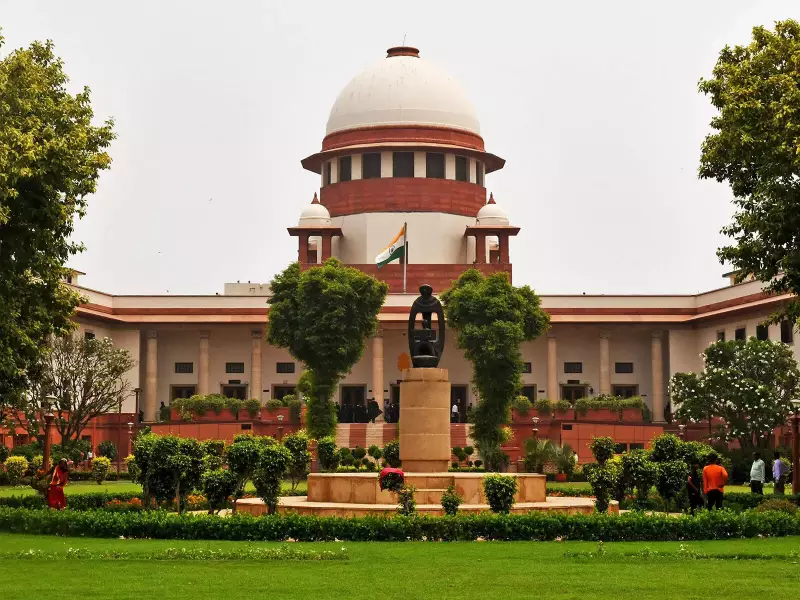
In a significant move to ensure timely elections, the Supreme Court of India on Monday firmly rejected a petition that sought to challenge the validity of the delimitation exercise for local governing bodies in Maharashtra. The apex court made it clear that it would not permit any litigation aimed at derailing the electoral process.
Bench's Stern Warning Against Delay
A bench comprising Chief Justice of India Surya Kant and Justice Joymalya Bagchi delivered a strong oral observation. The bench stated, "We're not going to entertain any plea that could delay polls." The judges expressed their view that the pleas appeared to be a tactical ploy to postpone the elections for local bodies like Zilla Parishads and Panchayat Samitis.
This decision reinforces the Supreme Court's earlier stance where it had set a strict deadline of January 31 for the conclusion of such polls. The court had previously emphasized that there should be no further impediments in conducting these crucial democratic exercises.

Background and Legal Challenge
The petition before the Supreme Court was filed following an order from the Bombay High Court. The High Court had examined the core dispute regarding delimitation in the districts of Kolhapur, Satara, and Sangli. The Bombay HC found no illegality in the decisions taken by the divisional commissioners concerning the delimitation process for these areas.
While dismissing the plea outright, the Supreme Court chose to keep a specific legal question open for future examination. The court noted that the issue regarding the delegation of powers in such matters could be examined in an appropriate case at a later date, but it would not be used as a reason to halt the current electoral timeline.
Implications for Maharashtra's Local Governance
The Supreme Court's decisive action clears a major hurdle for the State Election Commission to proceed with organizing polls for Maharashtra's grassroots democratic institutions. Local body elections are critical for governance and development at the district and block levels, impacting the delivery of essential services and schemes.
By refusing to allow what it perceived as a delaying tactic, the apex court has upheld the principle of timely elections, which is fundamental to a functioning democracy. The ruling ensures that the electoral process for Zilla Parishads and Panchayat Samitis can move forward without legal obstructions, allowing citizens to exercise their franchise and choose their local representatives.






