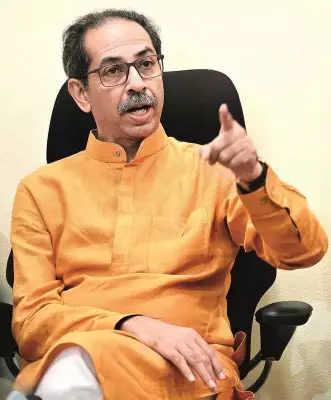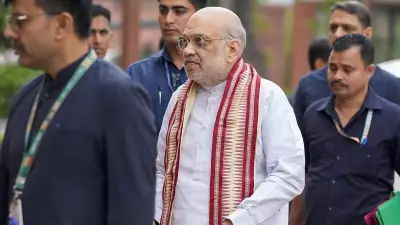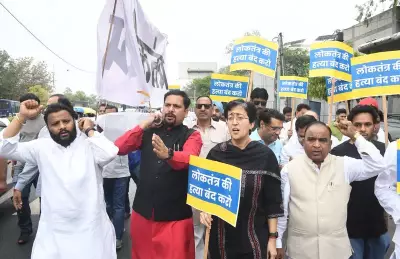
In a significant move ahead of the crucial Brihanmumbai Municipal Corporation (BMC) elections, the Shiv Sena (UBT) and Maharashtra Navnirman Sena (MNS) alliance on Friday laid out a comprehensive set of promises, with a monthly financial assistance of Rs 1,500 for registered women domestic workers as the flagship proposal. The joint workshop, held on the last day for withdrawal of nominations, was addressed by Sena (UBT) MLA Aaditya Thackeray and MNS leader Amit Thackeray.
Core Welfare Promises: Aid for Women and Tax Relief
The alliance positioned the monthly aid scheme for women domestic workers, modeled on the lines of the state's Ladki Bahin initiative, as a central pillar of their civic poll pitch. Aaditya Thackeray emphasized that the promise was about upholding the self-respect of Mumbai's working women and assured that it would be implemented once they assume power. The alliance also announced support for women from the Koli community through 'Ma Saheb Kitchen', offering meals at a subsidized rate of Rs 10.
In a major relief proposed for homeowners, the Sena (UBT)-MNS coalition promised to exempt properties up to 700 square feet from property tax. This marks a significant expansion from the current exemption limit for houses up to 500 square feet, aiming to reduce the financial burden on ordinary Mumbaikars.

Focus on Youth, Education, and Urban Infrastructure
Addressing employment generation, the alliance announced a self-employment assistance scheme. Under this, young men and women would receive financial help ranging from Rs 25,000 to Rs 1 lakh to start small businesses. They also pledged to develop mini sports complexes in every municipal ward.
On the education front, the coalition promised to start junior colleges within municipal schools to allow students to continue studies after Class X. They vowed that the civic body would open schools under different boards, with Marathi being made a compulsory subject to ensure its rightful place in Mumbai's education system.
For urban mobility and living, the promises included:
- Free or low-cost parking at BMC-owned facilities.
- A 'one-flat-one-parking' norm for redeveloped buildings.
- Reduced and simplified BEST bus fares into flat slabs (Rs 5–10 and Rs 15–20).
- Better footpaths and protection of open spaces.
- A climate action plan to improve air quality.
Broader Civic Amenities and Political Stance
The joint presentation included a wide array of other commitments aimed at improving civic life. These encompassed 100 units of free electricity, efforts to stabilize water charges, improved power supply in suburbs via BEST, crèches in every Assembly constituency, international-standard public toilets, and a new cancer hospital in Mumbai focusing on early detection.
Speaking at the workshop, Amit Thackeray framed the upcoming January 15 election as a battle against the "arrogance in power" and a mission to refocus on Mumbai and its people. Aaditya Thackeray also highlighted Mumbai's status as India's financial capital and stated the alliance's intent to push for control over approximately 1,800 acres of land currently with the Mumbai Port Trust.
The event, held just hours before the nomination withdrawal deadline, was strategically timed to project unity as the campaign enters its final phase. A party functionary indicated that the promises outlined were concentrated on BMC governance and meant to brief candidates and workers for campaigning. The alliance's full-fledged manifesto is scheduled to be released on Sunday by MNS chief Raj Thackeray and Sena (UBT) chief Uddhav Thackeray at a joint press conference in Shiv Sena Bhavan.