

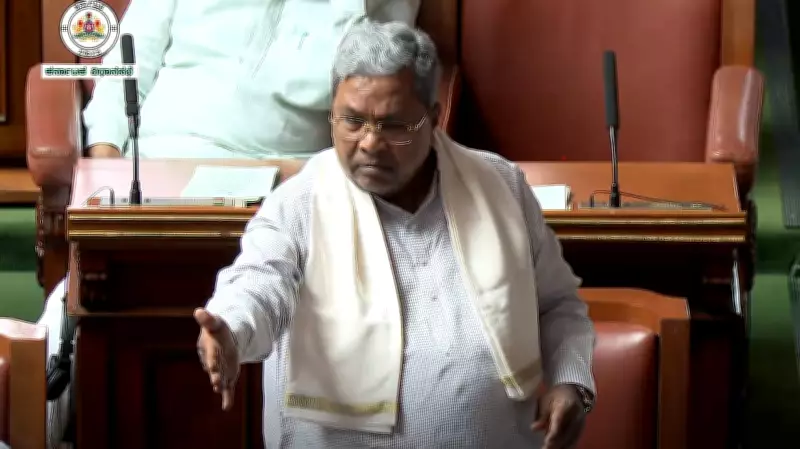
Siddaramaiah Champions Rational Thought in Karnataka Politics
In a bold statement that has sparked widespread discussion, Karnataka Chief Minister Siddaramaiah has openly declared his commitment to rational thinking, distancing himself from traditional beliefs such as Rahu Kala and dietary restrictions on religious occasions. The veteran politician made these remarks while addressing queries about his personal practices and the timing of the state budget presentation.
Rejecting Superstitions and Embracing Modernity
Siddaramaiah stated unequivocally, "I do not believe in Rahu Kala," referring to the inauspicious period in Hindu astrology that many avoid for important activities. He further revealed that he consumes meat on festivals like Ugadi and Shivratri, challenging conventional norms that often advocate vegetarianism during such times. This stance, he explained, is rooted in his long-standing promotion of rational and scientific thinking over blind adherence to superstitions.
Emphasizing his approach, Siddaramaiah highlighted that his actions are guided by logic and reason rather than religious dogma. "I have always encouraged people to think critically and question traditions that lack a rational basis," he asserted, underscoring his role in fostering a progressive mindset within the political and social spheres of Karnataka.

Defending the Budget's Auspicious Timing
In a related development, Siddaramaiah defended the timing of the recent Karnataka state budget, which was presented at what he described as an 'auspicious' time. He clarified that this decision was not made arbitrarily but followed extensive consultations with senior officials and family members. "We considered various factors, including traditional beliefs, to ensure the budget's presentation was well-received and aligned with cultural sentiments," he noted.
This move has drawn attention to the balancing act between modern governance and cultural practices. Siddaramaiah explained that while he personally advocates for rationality, he respects the diverse beliefs of the populace and aims to incorporate them where feasible in administrative decisions. The budget timing, therefore, reflects a pragmatic approach that blends consultation with contextual awareness.
Implications for Karnataka's Political Landscape
Siddaramaiah's comments have ignited debates across Karnataka, with reactions ranging from support for his rationalist views to criticism from traditional quarters. Key points of discussion include:
- The role of rationalism in contemporary Indian politics and its impact on policy-making.
- The intersection of personal beliefs and public governance, especially in a culturally diverse state like Karnataka.
- How leaders navigate between promoting progressive ideas and respecting established customs.
Observers note that this episode underscores Siddaramaiah's consistent stance as a proponent of rational thinking, a theme that has characterized his political career. It also highlights the ongoing evolution of Karnataka's socio-political discourse, where issues of tradition versus modernity continue to shape public narratives.
As the state moves forward, Siddaramaiah's remarks are likely to influence future discussions on governance, culture, and individual freedoms, reinforcing the importance of evidence-based decision-making in a complex societal framework.






