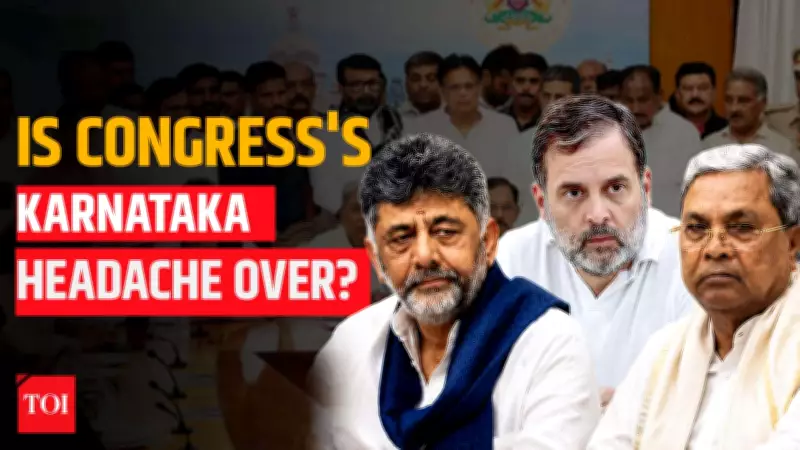
After more than two years of intense speculation, the Congress party has finally initiated a leadership transition in Karnataka. Siddaramaiah has stepped down as chief minister, clearing the path for D K Shivakumar to assume the top post. This move brings an end to a prolonged power struggle that had cast a shadow over the state government's stability.
End of a Long-Drawn Succession Battle
The transition, long anticipated, marks a significant shift in Karnataka's political landscape. Siddaramaiah's resignation comes after weeks of negotiations and internal party discussions. The decision was formally announced following a meeting between the outgoing chief minister and the Congress high command. Shivakumar, a veteran party leader and former minister, will now lead the state as it prepares for the 2028 assembly elections.
Key Challenges Ahead
While the succession issue appears settled, several critical questions remain unanswered. The most pressing is the formation of the new cabinet. Shivakumar will need to balance the aspirations of various factions within the party, including loyalists of Siddaramaiah and other regional leaders. The allocation of key portfolios will be closely watched as an indicator of the power dynamics within the government.

Another major concern is the future role of Siddaramaiah. As a seasoned politician with a strong support base, his continued influence could either strengthen or complicate Shivakumar's leadership. The party leadership has hinted at a significant role for Siddaramaiah, possibly at the national level, but specifics have yet to be disclosed.
Managing Competing Power Centres
Congress's primary challenge will be to maintain stability while managing competing power centres. The party has a history of internal strife in Karnataka, and the transition period could be fraught with tensions. Shivakumar's ability to unite the party and deliver effective governance will be crucial in the run-up to the next elections.
The leadership change also has implications for the opposition Bharatiya Janata Party (BJP), which will seek to exploit any signs of disunity within the Congress. The BJP has already criticized the transition as a 'musical chairs' game that prioritizes internal politics over public welfare.
Looking Ahead
As Congress navigates this transition, the focus will be on policy continuity and administrative efficiency. The new chief minister inherits a state facing challenges such as drought, unemployment, and infrastructure deficits. Shivakumar's experience as a former minister and his reputation as a grassroots leader may help address these issues, but he will need to hit the ground running.
The coming weeks will reveal whether the leadership change brings the stability that Congress hopes for, or if it opens new fault lines within the party. For now, the Karnataka dilemma appears resolved, but the real test lies ahead.