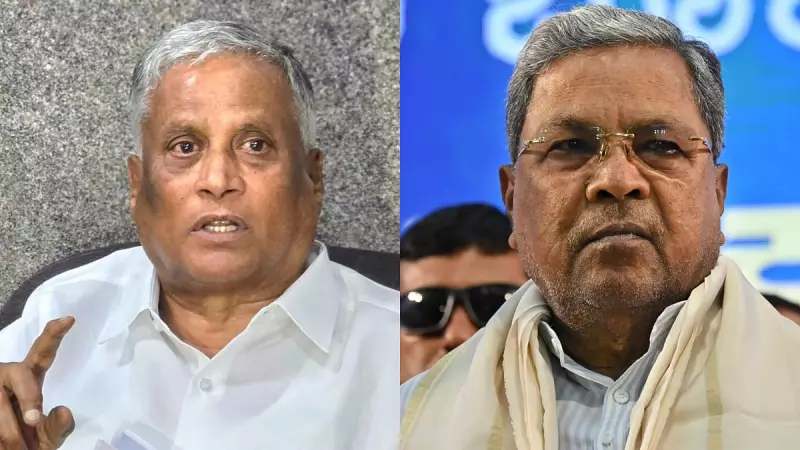
Union Minister of State V. Somanna has launched a sharp attack on Karnataka Chief Minister Siddaramaiah, accusing his administration of a major failure in governance. The central allegation is that the state government has not filled a single post among the massive backlog of over four lakh vacancies during its two-and-a-half-year tenure.
A Scathing Accusation of Administrative Failure
The criticism, voiced on December 18, 2025, highlights a significant point of contention in Karnataka's political landscape. Somanna, a prominent BJP leader from the state, pointed out that the government's inaction has left a staggering number of positions empty across various departments. This, he implies, affects public service delivery and employment opportunities for the youth.
The Core of the Controversy: Numbers and Timeline
More than four lakh (400,000) posts are reported to be vacant in the Karnataka state administration. The most damning part of the accusation, as stated by Somanna, is that not even a single one of these posts has been filled in the last two-and-a-half years. This period directly corresponds with the current Congress-led government under Chief Minister Siddaramaiah, which took office in mid-2023.
The Union Minister's statement frames this as a clear lapse in the government's duty. Filling these vacancies is crucial for the smooth functioning of the state machinery, impacting sectors from education and healthcare to law and order. The delay also represents a lost opportunity for job creation, a critical issue for any administration.
Political Repercussions and Public Impact
This accusation is likely to fuel the ongoing political battle between the ruling Congress and the opposition BJP in Karnataka. Somanna's remarks put the government on the defensive, forcing it to explain the reasons for the delay. The issue touches directly on governance, employment, and administrative efficiency—key themes for any electorate.
The state government is now expected to respond with its own data or justification, possibly citing procedural delays, financial constraints, or ongoing recruitment processes. However, the sheer scale of the vacancy number cited by the Union Minister makes this a potent political weapon.
For the public, the continuation of such a high number of vacancies can lead to overburdened existing staff, slower implementation of schemes, and reduced quality of services. The political showdown, therefore, revolves around a tangible issue of public welfare and administrative accountability.