Samajwadi Party Levels Serious Allegations Against Uttar Pradesh Government
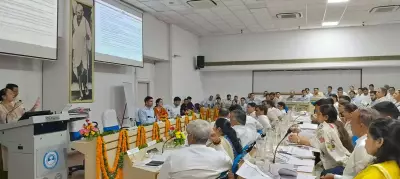
In a heated session of the Uttar Pradesh Legislative Council on Thursday, members of the Samajwadi Party launched a scathing attack on the state government, alleging a significant surge in criminal activities and accusing authorities of engaging in selective, biased enforcement primarily targeting the PDA (Pichda, Dalit, Alpsankhyak) community. The opposition party presented crime statistics and specific case examples to challenge the government's claims of maintaining law and order.
Allegations of Selective Enforcement and Political Bias
Samajwadi Party MLC Kiranpal Kashyap delivered a particularly pointed critique, directly accusing the Bharatiya Janata Party of orchestrating communal disturbances during periods when they were not in power. "When the government claims there have been no riots since 2017, it's precisely because those who were responsible for instigating such violence are now occupying positions within the government itself," Kashyap asserted during the council proceedings.
Kashyap further contended that law enforcement actions were being determined primarily by caste and religious considerations rather than legal merit. He presented crime data that he claimed directly contradicted Chief Minister Yogi Adityanath's frequent assertions of maintaining a zero-tolerance policy toward criminal activities and establishing what he terms "Ram Rajya" (an ideal state of governance) in Uttar Pradesh.

Specific Cases Cited and Questions About Enforcement
The Samajwadi Party legislator enumerated several specific criminal incidents where he alleged police had failed to take appropriate action. "Where is Yogi's bulldozer now?" Kashyap questioned pointedly, referring to the government's controversial practice of demolishing properties of accused individuals. He suggested that if the suspects in these cases had belonged to the PDA communities, their homes would have already been razed and family members incarcerated.
Fellow SP MLC Mukul Yadav supplemented these allegations by detailing additional cases, including a recent episode from Jaunpur district where two police personnel were allegedly captured on video stealing a mobile phone from a retail establishment. Yadav also challenged the government's emphasis on Sanatan (eternal) values, referencing the recent confrontation between state authorities and Swami Avimukteshwaranand during the Magh Mela religious gathering. "The BJP demonstrates no respect, not even for Brahmins," Yadav declared during his address to the council.
Crime Statistics Presented by Opposition
Lal Bihari Yadav, who serves as the Leader of the Opposition in the Legislative Council, presented what he described as alarming crime statistics sourced from the National Crime Control Bureau. According to his presentation, Uttar Pradesh recorded 55,292 cases of crimes against women in 2025 alone. Even more concerning, he noted that just in the first fifteen days of 2026, preliminary reports indicated 1,990 such cases had already been registered across the state.
Government's Response and Counter-Arguments
Jal Shakti Minister Swatantra Dev Singh, responding on behalf of the state government, categorically denied all allegations leveled by the Samajwadi Party members. The minister presented alternative crime statistics demonstrating what he characterized as a substantial decline in various criminal categories since the BJP assumed power in 2017.
"Since our government took office in 2017, there have been no incidents of riots, no communal violence, no dacoities, and no major lootings reported across Uttar Pradesh," Minister Singh stated emphatically during his rebuttal. He defended the administration's record on maintaining public order and implementing equitable law enforcement practices throughout the state.
The exchange highlights deepening political tensions in Uttar Pradesh regarding governance, law enforcement priorities, and the treatment of marginalized communities, with both sides presenting conflicting data to support their respective positions on the state's security situation.