

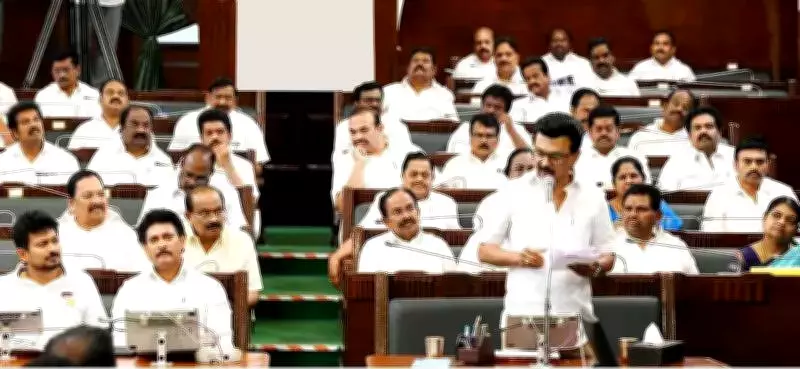
CM Stalin's Assembly Valedictory: Political Grace and Campaign Confidence
In a significant address marking the conclusion of the current Tamil Nadu Legislative Assembly session, Chief Minister M K Stalin delivered a speech that masterfully blended political courtesy with clear campaign messaging. The Dravida Munnetra Kazhagam (DMK) leader extended thanks to his political adversaries while simultaneously expressing unwavering confidence that his party would return to power following the upcoming elections.
Extending Gratitude to Political Opponents
During his concluding remarks, Stalin specifically thanked Tamil Nadu Governor R N Ravi and Leader of the Opposition Edappadi K Palaniswami (EPS) of the All India Anna Dravida Munnetra Kazhagam (AIADMK). He acknowledged that constructive criticism from political opponents had actually strengthened his government's performance and development initiatives.
"Those who point out shortcomings are the ones who give wings to our development," Stalin declared, emphasizing his appreciation for opposition feedback. He particularly recognized EPS for flagging issues, identifying shortcomings, and offering advice to the government "in a mature and dignified manner."

Despite Palaniswami's absence from the final session, Stalin expressed gratitude: "Though he did not turn up today, I thank the Leader of the Opposition for extending support to the govt." Regarding Governor Ravi, Stalin clarified he bore no personal differences, though he would firmly oppose anyone undermining Tamil self-respect. "As per Tamil culture, I thank the governor," he stated.
Context of Political Friction
This diplomatic gesture occurred against a backdrop of prolonged friction between the state government and Raj Bhavan (Governor's office). Notably, Governor Ravi had previously walked out of the assembly without delivering the customary address during the last sitting, highlighting the strained relationship between constitutional positions.
Reflecting on Governance Challenges and Achievements
Stalin reflected on the DMK's return to power in 2021, acknowledging that the electoral victory brought both joy and considerable anxiety. He questioned whether his administration would successfully fulfill electoral promises, govern effectively, and meet public expectations amid significant challenges.
The Chief Minister outlined the substantial obstacles his government faced, including reviving the state from setbacks inherited from the previous regime and navigating what he described as "the discriminatory approach" by the Union government. Despite these hurdles, Stalin asserted that "the DMK government overcame all this and ensured comprehensive development through various schemes and projects over the last five years," a statement met with enthusiastic desk-thumping from treasury benches.
Looking Forward: Dravidian Model 2.0
Stalin declared that the experience of governing for five years had strengthened his resolve and preparedness for future challenges. He introduced an ambitious vision for the future, announcing: "The Dravidian Model 2.0 that we are going to form will outperform the achievements of this regime."
The Chief Minister highlighted several flagship initiatives that would form the foundation of this enhanced governance model:
- Vidiyal Payanam: A scheme focused on development and progress
- Pudhumai Penn: Initiatives supporting women's empowerment
- Naan Mudhalvan: Educational and skill development programs
- Chief Minister's Breakfast Scheme: Nutritional support for students
- Tamil Nadu Assurance Pension Scheme: Social security measures
Confident Conclusion and Acknowledgments
Reiterating his party's electoral confidence, Stalin asserted that the DMK would form the government "again and again," signaling his expectation of continued political dominance in Tamil Nadu. He concluded his address by extending thanks to multiple stakeholders:

- Dedicated party cadres and workers
- The Assembly Speaker for presiding over sessions
- Senior ministers within his cabinet
- Alliance leaders from partner parties
- Legislators across all political parties
The speech effectively balanced statesmanship with political positioning, acknowledging opposition contributions while firmly establishing the DMK's narrative of successful governance and future electoral confidence as Tamil Nadu approaches another significant political cycle.





