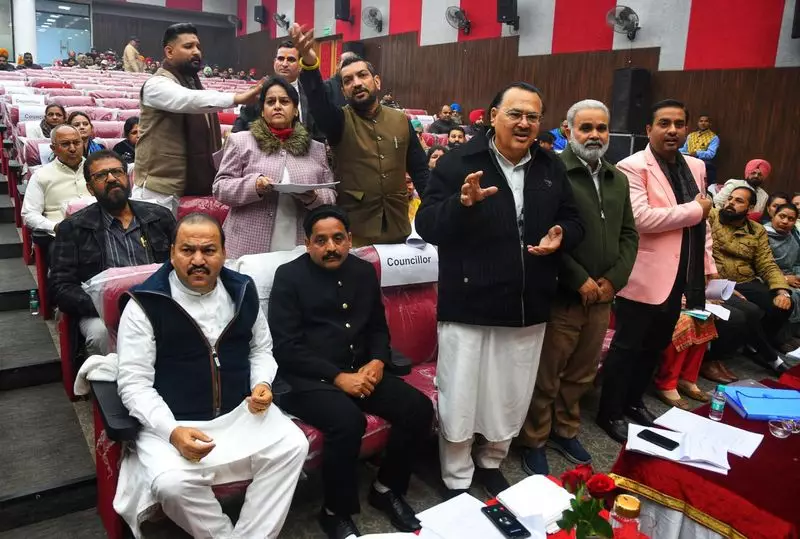
A stormy session of the Ludhiana Municipal Corporation House culminated with the passage of all 33 agenda items, including the crucial budget, but not before opposition Bharatiya Janata Party councillors staged a dramatic walkout. The meeting, held on Wednesday, was marked by intense protests and procedural disputes that highlighted the deepening political fissures within the city's civic body.
Chaos and Confrontation in the House
The proceedings quickly descended into turmoil as soon as the meeting commenced. BJP councillors, led by their party leader in the House, raised strong objections regarding the agenda and the conduct of the meeting. They alleged that proper procedures were not being followed and that their right to discuss important civic issues was being curtailed by the ruling Congress majority.
Despite the uproar, Mayor Balkar Singh Sandhu, who presided over the meeting, moved forward with the agenda. The most significant item on the list was the municipal budget for the fiscal year, a document outlining the city's financial priorities and allocations. Other proposals covered a range of administrative and development matters essential for the city's functioning.

The Walkout and Subsequent Passage
Frustrated by their failed attempts to halt the proceedings and engage in debate, the BJP councillors made the decision to stage a walkout. This move was a symbolic protest against what they termed as the "autocratic" style of the meeting's management. Following their exit, the House, now predominantly composed of Congress councillors and allies, proceeded to take up the remaining proposals.
In the absence of the main opposition, all 33 proposals were passed in quick succession. This sweeping approval granted administrative and financial sanctions for various projects and policies. The efficiency of the post-walkout session stood in stark contrast to the heated arguments that had characterized the opening moments.
Implications for Ludhiana's Civic Governance
The events of this MC House meeting underscore the challenges of bipartisan governance in urban local bodies. While the ruling party successfully navigated the session to secure approval for its planned agenda, the manner of its passage is likely to fuel further political discord. The BJP's walkout signals a breakdown in constructive dialogue, which could impede collaborative problem-solving for the city's pressing issues like infrastructure, sanitation, and public services.
For residents of Ludhiana, the immediate outcome is that the municipal budget and other proposals are now officially approved, allowing the administration to initiate funded projects. However, the underlying political conflict raises questions about the long-term health of democratic deliberation in the city's civic affairs. The need for a more inclusive and transparent process in future meetings has become glaringly apparent.