Sunetra Pawar's Political Crucible: Navigating Mahayuti, NCP Factions, and the Pawar Legacy
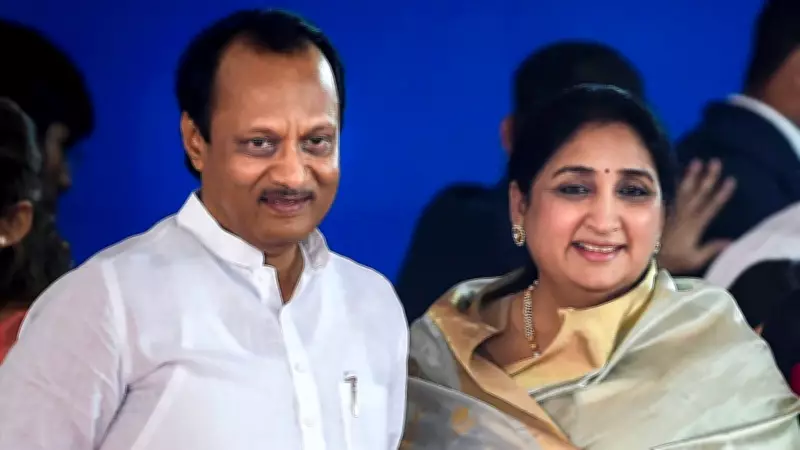
Sunetra Pawar is poised to become the Maharashtra Deputy Chief Minister, succeeding her late husband Ajit Pawar after being elected as the leader of the NCP Legislature Party on Saturday. This elevation marks a significant transition in Maharashtra politics, shifting from Ajit Pawar's command-style leadership to a potentially more consultative model under Sunetra. However, her journey is fraught with challenges on multiple fronts within the BJP-led Mahayuti government, inside the Nationalist Congress Party, and amidst the complex dynamics of the Pawar family.
From Social Work to Political Spotlight
A Rajya Sabha MP since 2024, Sunetra Pawar entered active politics only recently after decades dedicated to social work and development initiatives in Baramati. Her rise comes at a critical juncture for the NCP, which remains divided between leaders who stayed with Sharad Pawar and those who joined Ajit Pawar after the party's split in 2023. As the party attempts to reorganize itself around her, Sunetra must navigate this fractured landscape while establishing her authority.
Managing the Government Partnership with BJP
In the government, Sunetra Pawar faces the immediate task of safeguarding the NCP's position within the ruling Mahayuti alliance. Ajit Pawar had exercised direct control over key ministries and served as the party's principal negotiator with the BJP. In contrast, Sunetra has limited experience in administration or political bargaining, which could expose her to pressures from senior BJP leaders.

Her low-key public style may make it harder to assert authority in coalition discussions, particularly during potential Cabinet reshuffles or portfolio realignments. She must prevent any erosion of the party's ministerial strength and ensure that NCP legislators continue to be treated as equal partners. Any perception that she lacks political leverage could reduce the NCP's say in Cabinet decisions and policy matters, potentially weakening the party's collective position.
Negotiating Space with the BJP
Ajit Pawar had built a direct working equation with senior BJP leaders, serving as the principal bridge between the two parties. His political weight and control over NCP legislators allowed him to bargain firmly over portfolios, funding for projects, and policy decisions. Sunetra does not have a negotiating record and must establish her authority with the BJP from scratch.
There is concern within the NCP that the BJP may prefer dealing with individual ministers rather than the party leadership, which could undermine Sunetra's position. She will need to ensure that decisions affecting the party are routed through her office and not settled through parallel channels. Balancing cooperation with the BJP against pressure from party sections uneasy about long-term dependence on a dominant ally will be crucial.
Handling Senior Leaders and Regional Power Centres
Within the NCP, Sunetra must manage assertive leaders who command their own bases and have long political careers. Figures such as Rajya Sabha MP Praful Patel, state minister Chhagan Bhujbal, Raigad Lok Sabha MP Sunil Tatkare, and Parli MLA Dhananjay Munde hold influence across different regions and organizational wings.
Several leaders who joined Ajit after the split did so largely to remain in power. These regional satraps were bound together by Ajit's political authority and his willingness to support his followers politically and financially. A change in leadership could reopen questions about loyalty and control, especially if decisions begin to be taken collectively rather than by a single authority figure.
It remains to be seen how readily senior leaders will accept direction from Sunetra or from her sons Parth and Jay, on whom she is expected to depend heavily. Both sons are still working to establish themselves politically, with Parth losing his electoral debut in the 2019 Lok Sabha polls and Jay not being involved in active politics.

Balancing the Sharad Pawar Factor
Another significant challenge will be managing relations with Sharad Pawar and his NCP(SP) faction if stalled reunification efforts resume. A merged party would inevitably see Sharad and his daughter Supriya Sule occupying important positions, limiting space for independent authority.
Leaders aligned with the Ajit faction fear that a reunion could reduce their influence and revive internal hierarchies that existed before the 2023 split. This would put Sunetra in a position where she must balance two competing groups within the same party structure.
On Saturday, Sharad Pawar broke his silence on the potential NCP merger, stating, "For the last four months, Ajit Pawar, Jayant Patil and Shashikant Shinde were involved in the talks of merger.... Now, an unfortunate accident has happened. It seems that the process will now be discontinued." This indicates that recent events may stall reconciliation efforts between the factions.
The original division in the NCP was driven partly by disagreements over Sharad Pawar's leadership style and political strategy. His potential return to a central role would revive those concerns among leaders who had aligned with Ajit, creating a test for Sunetra on whether she can bind the flock together amidst these complex dynamics.
As Sunetra Pawar steps into this pivotal role, her ability to navigate coalition pressures, manage party factions, and address the Sharad Pawar factor will define her initial political tests and shape the future trajectory of the NCP in Maharashtra's political landscape.