SYL Canal Impasse Continues as Punjab and Haryana Chief Ministers Fail to Find Common Ground
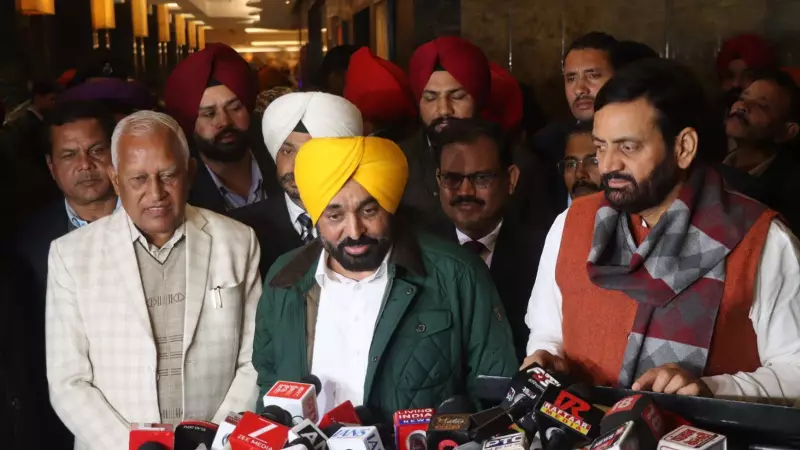
The much-anticipated meeting between Punjab Chief Minister Bhagwant Mann and Haryana Chief Minister Nayab Singh Saini regarding the contentious Satlej Yamuna Link (SYL) canal concluded without a resolution on Tuesday. The leaders have now delegated the responsibility to their respective officials, who are scheduled to meet three to four times each month in an effort to break the deadlock.
CMs Emphasize Dialogue but Acknowledge Water Dispute Hurdles
At a joint media briefing following the inconclusive talks, Punjab CM Bhagwant Mann underscored the fundamental issue at hand. "Juice will not flow in the SYL canal. Water will flow. As long as the issue of water is not sorted, there is no point constructing the canal," he stated emphatically. Mann sought to frame the discussion in a spirit of fraternity, noting, "We come from the land of Bhai Ghanaiya, who offered water to even enemies. Haryana is not our enemy. It is our brother, but as it is evident, issues around water are surfacing everywhere."
He elaborated on the planned bureaucratic engagements, revealing, "It could be 3-4 times a month. They will not meet only after the direction of the Supreme Court, but frequently. We will sort this issue amicably." Mann added that the SYL matter remains a persistent topic of discussion between the two leaders, even during informal encounters at public functions.

Haryana CM Highlights Constructive Atmosphere and Historical Context
Haryana CM Nayab Singh Saini described the meeting as positive and cordial, drawing inspiration from the region's spiritual heritage. "This is the sacred land of the Gurus, and their teachings continue to be invaluable even today, serving as a guiding light for society and inspiring harmony, mutual respect, and constructive dialogue," he remarked. Saini confirmed that detailed discussions took place point by point, with both states agreeing to hold regular officer-level meetings within their irrigation departments to explore practical and lasting solutions.
"Meetings are being held continuously in accordance with the directions of the Hon'ble Supreme Court, and today's meeting was also organised in that spirit," he noted, referencing previous mediation efforts involving Union Jal Shakti Minister C R Patil.
Political Opposition Alleges Collusion and Delay Tactics
The announcement of ongoing official-level talks drew sharp criticism from political opponents. Indian National Lok Dal president Abhay Singh Chautala accused the ruling parties of both states of acting in collusion to delay the canal's construction until after the Punjab elections scheduled for next year. "If this issue could have been resolved through officials alone, there would have been no need for meetings between the chief ministers of the two states. The entire exercise is being carried out to mislead the public," Chautala alleged.
He further contrasted CM Mann's current conciliatory tone with his earlier hardline stance, challenging him to implement the Supreme Court's decisions immediately if his commitment to equitable water sharing is genuine.
Background and Broader Implications
The SYL canal dispute, which has simmered between Punjab and Haryana since the 1980s, represents a critical inter-state water sharing conflict in northern India. The failure of the chief ministers to reach a consensus underscores the deep-seated complexities surrounding river water allocation, agricultural needs, and regional politics.
The decision to escalate discussions to frequent official meetings reflects a procedural approach aimed at de-escalating tensions while adhering to judicial directives. However, with political accusations flying and fundamental disagreements over water rights unresolved, the path to a final settlement remains fraught with challenges. The coming months of bureaucratic dialogue will be closely watched as a barometer of whether incremental progress can pave the way for a broader political agreement on this perennial issue.