Tambaram Election: DMK's Gamble with New Face Creates Political Uncertainty
Tambaram, historically a stronghold for the DMK, now finds itself on uncertain ground after the party's controversial decision to drop sitting MLA S R Raja. This move has sparked significant unrest within DMK ranks and unexpectedly opened the door for rival parties, including the AIADMK and TVK, to capitalize on voter dissatisfaction and urban concerns.
From Semirural Suburb to Urban Hub: A Changing Electorate
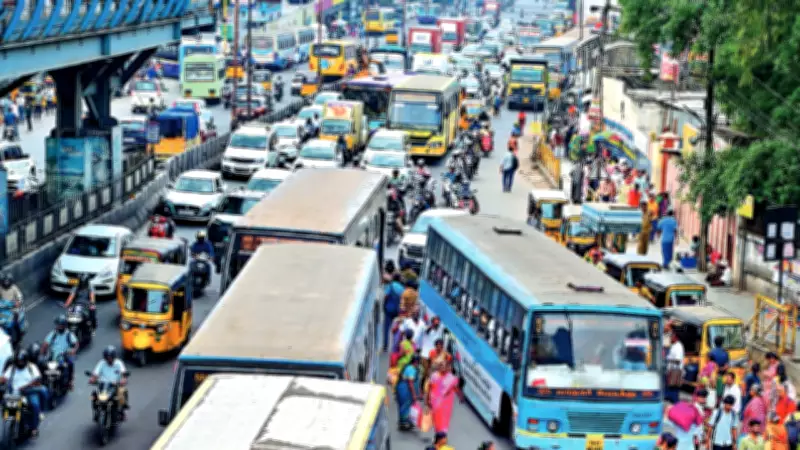
Since emerging as a separate constituency following the 1977 delimitation, Tambaram has undergone a dramatic transformation. Over the decades, it has evolved from a semirural suburb into a dense urban cluster, becoming a major residential and commercial hub. This rapid urbanization has fundamentally reshaped voter priorities, with issues such as water supply, stormwater drainage, traffic bottlenecks, and waste management now dominating campaign discourse across all party lines.
DMK's Legacy and the Raja Factor
The DMK has a strong historical presence in Tambaram, having won seven of the 11 elections since 1977. Leaders like M A Vaithyalingam and, more recently, S R Raja have anchored the party's dominance here. Raja, a three-time MLA, had consolidated a stable support base across various residential pockets, making him a formidable figure in local politics.

However, in a bold and risky move, the DMK leadership dropped Raja and fielded Dr R S Kiruthika Devi, a new face, as their candidate. This decision has triggered protests from Raja's loyal supporters, who feel betrayed by the party. The leadership's gamble appears aimed at countering voter fatigue and recalibrating the party's image towards a fresh, youth-focused DMK 2.0. Yet, this strategy has left the party vulnerable, with rivals sensing a golden opportunity to make inroads.
AIADMK's Comeback Bid and TVK's Wild-Card Entry
The AIADMK, which last won Tambaram in 2011, is actively seeking to capitalize on the internal churn within the DMK. Their candidate, former South Chenani MP C Rajendran, is a familiar face in the area, having worked his way up from the grassroots as a councillor in Chitalapakkam and former chairman of the St Thomas Mount Panchayat union. AIADMK cadres believe that in Raja's absence, they can make significant inroads among longtime residents who were closely aligned with the ousted MLA.
Meanwhile, TVK emerges as the wild-card entry in this election. Their candidate, D Sarathkumar, is expected to draw support from younger voters and sections disillusioned with the traditional Dravidian duopoly of DMK and AIADMK. Notably, residents report that Sarathkumar has garnered support from former DMK member Jai Pradeep Chandran, adding to his credibility. Although TVK lacks the organizational depth of its rivals, its campaign has been sharply focused on governance, corruption, and urban quality-of-life issues. Political observers suggest that even a modest vote share for TVK could significantly alter the election results, making it a potential kingmaker.
Voter Sentiment and the Road Ahead
As the election approaches, voter sentiment in Tambaram remains complex. K Mugilan, a DMK supporter from Tambaram, commented, "Had Raja been there, the competition would have been tough. But Kiruthika is not well known across the constituency. Raja loyalists may not vote for her as they had gheraoed T R Baalu's house and even Arivalayam when the party denied him a ticket." This highlights the deep-seated discontent among traditional DMK voters.
Perulli Viswanathan, a social activist from Tambaram, added, "Both AIADMK and DMK members have visited houses and verified the voters' list. It remains to be seen if TVK can affect the mandate. The voters are clear about one thing: we need development." This underscores the electorate's primary focus on tangible improvements in infrastructure and urban management, regardless of party affiliations.
In summary, the Tambaram election is poised to be a closely contested battle, with the DMK's internal strife creating a volatile political landscape. The outcome will likely hinge on how effectively each party addresses the pressing urban issues and navigates the shifting loyalties of a transformed electorate.