

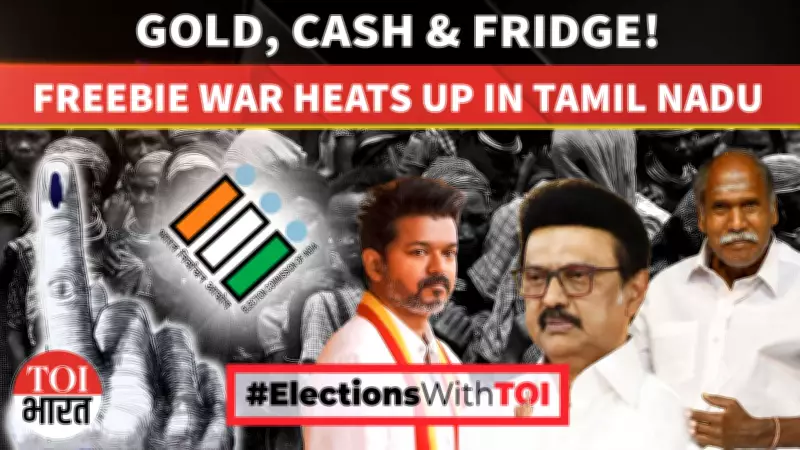
Tamil Nadu 2026 Polls: Freebies War Heats Up Between DMK, AIADMK & Rivals
The political landscape in Tamil Nadu is ablaze as the 2026 assembly elections approach, with the contest shifting from mere governance debates to a fierce battle of promises. Major parties, led by Chief Minister M.K. Stalin's DMK and the opposition AIADMK under Edappadi K. Palaniswami, are rolling out an extensive array of welfare measures aimed at wooing voters. This includes initiatives like free bus rides, subsidized LPG cylinders, direct cash transfers, gold distribution schemes, and various household benefits, setting the stage for a high-stakes electoral showdown.
Key Players and Their Strategies
Beyond the two dominant forces, the electoral fray features significant contenders such as actor-politician Vijay, former AIADMK leader V.K. Sasikala, and national parties like the BJP and Congress. Each is crafting tailored freebie packages to carve out voter segments, making the 2026 polls one of the most competitive in recent memory. The DMK, leveraging its incumbency, emphasizes continuity and expansion of existing schemes, while the AIADMK critiques fiscal imprudence and promises enhanced benefits.
Historical Roots of Freebie Culture
The tradition of freebies in Tamil Nadu politics has deep historical roots, tracing back to the era of M.G. Ramachandran and later fortified by J. Jayalalithaa. Their populist policies established a precedent where welfare measures became central to electoral success. Today, this culture not only persists but has intensified, with parties vying to outdo each other in generosity. This evolution reflects a strategic shift towards immediate voter gratification over long-term policy discussions.

Sustainability and Societal Impact
As campaign spending escalates, critical questions emerge about the sustainability of this welfare model. Economists and analysts warn that unchecked freebies could strain state finances, potentially leading to budgetary deficits and reduced investment in infrastructure. Moreover, there is a growing debate on whether such schemes empower citizens by alleviating poverty or foster dependency, undermining self-reliance. Voters are thus faced with a dilemma: short-term benefits versus long-term economic health.
Voter Perspectives and Future Implications
For the electorate, the freebies war presents both opportunities and challenges. While many welcome the immediate relief offered by cash and goods, others express concerns about the quality of governance and fiscal responsibility. The outcome of the 2026 elections will likely hinge on how parties balance these promises with credible plans for sustainable development. Ultimately, this contest may redefine Tamil Nadu's political trajectory, influencing welfare policies across India.






