

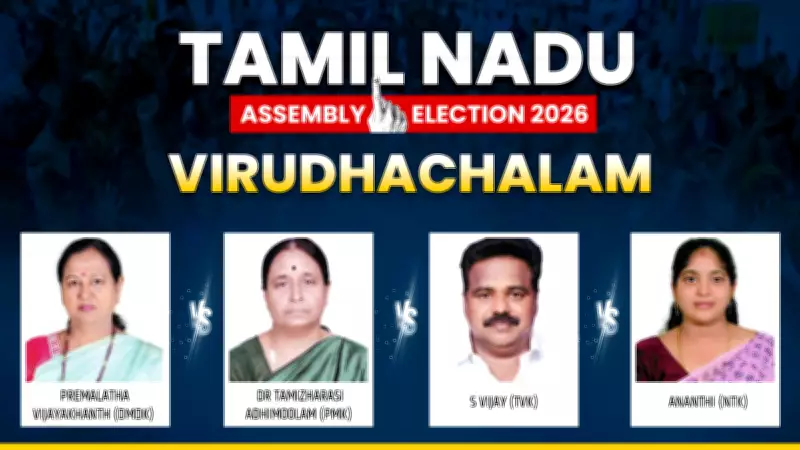
Tamil Nadu's Virudhachalam Constituency Braces for Intense Multi-Cornered Contest in 2026 Assembly Elections
The political landscape in Tamil Nadu is heating up as the Virudhachalam assembly constituency prepares for what is anticipated to be a highly competitive and multi-faceted battle in the upcoming 2026 state legislative elections. Early indications suggest that this electoral segment could witness a tough contest among several key regional parties, setting the stage for a dramatic showdown.
Key Players in the Fray
According to recent political analyses and ground reports, the Desiya Murpokku Dravida Kazhagam (DMDK) and the Pattali Makkal Katchi (PMK) are emerging as prominent contenders in Virudhachalam. Both parties have a significant historical presence and voter base in the region, which is expected to intensify the electoral dynamics.
In addition to these established entities, the Tamilaga Valvurimai Katchi (TVK) and the Naam Tamilar Katchi (NTK) are also actively positioning themselves to challenge the dominance of traditional players. This inclusion of multiple parties is likely to fragment the vote share, making the contest even more unpredictable and closely watched by political observers across the state.

Factors Influencing the Electoral Battle
The Virudhachalam constituency, known for its diverse demographic profile and socio-economic challenges, has often been a bellwether for broader political trends in Tamil Nadu. Key issues such as agricultural distress, infrastructure development, and local governance are expected to dominate the campaign narratives of all competing parties.
Moreover, the strategic alliances and seat-sharing agreements that parties might forge in the lead-up to the elections could further alter the competitive landscape. As of now, all four parties—DMDK, PMK, TVK, and NTK—are reportedly gearing up to contest independently, which underscores the fragmented nature of Tamil Nadu's political arena.
Historical Context and Future Implications
Virudhachalam has a history of witnessing close electoral fights, and the 2026 polls are poised to continue this tradition. The outcome here could have significant implications for the overall political arithmetic in Tamil Nadu, potentially influencing the formation of the next state government.
Political analysts emphasize that the performance of regional parties in constituencies like Virudhachalam will be crucial in determining the balance of power, especially given the state's tendency to favor regional over national parties in assembly elections.
As the election year approaches, all eyes will be on Virudhachalam to gauge the mood of the electorate and the effectiveness of campaign strategies deployed by the DMDK, PMK, TVK, and NTK. This multi-cornered contest is not just a local battle but a microcosm of the larger political shifts unfolding in Tamil Nadu.






