Tamil Nadu's Subsidy Expenditure Skyrockets by 39% in 2024-25
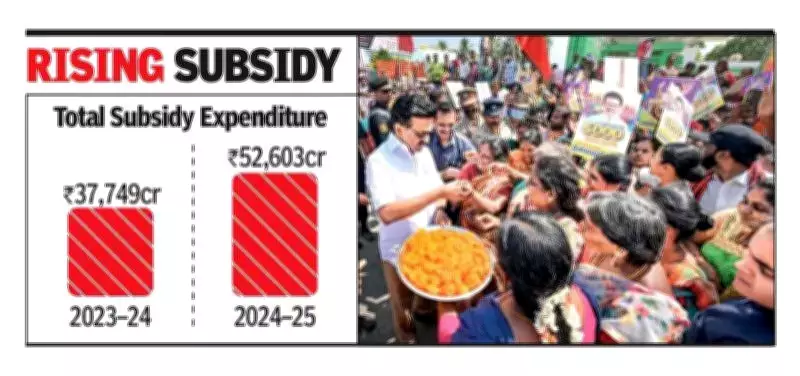
In a significant fiscal development, Tamil Nadu has reported a sharp expansion in its subsidy spending for the financial year 2024-25, with an increase of approximately 39% compared to the previous year. According to the latest Finance Accounts, the state's expenditure under the subsidies head rose to ₹52,603 crore for the year ended March 2025, up from ₹37,749 crore in 2023-24. This substantial rise of about ₹14,854 crore highlights a major shift in the state's budgetary priorities, driven largely by enhanced welfare initiatives and energy subsidies.
Key Drivers of the Subsidy Surge
The bulk of the increase in subsidy spending can be attributed to two flagship programs of the DMK government. Kalaignar Mahalir Urimai Thittam, which provides cash assistance to women, and the free bus travel scheme for women, have seen substantial allocations, reflecting the state's focus on social welfare and gender empowerment. These schemes have been pivotal in boosting the overall subsidy outlay, with the Department of Special Programme Implementation playing a central role in their execution.
Additionally, a notable contributor to the subsidy hike was a single payment of ₹6,916 crore made by the state agriculture department to the Tamil Nadu Electricity Board (TNEB). This payment covered the electricity usage for farmers' electric pumps, a category that recorded no spending in the previous fiscal year. This move underscores the state's commitment to supporting the agricultural sector, albeit at a significant cost to the exchequer.

Sharp Decline in Natural Calamity Relief Funds
In stark contrast to the overall subsidy increase, spending on natural calamity relief experienced a dramatic reduction. Expenditure under this head plummeted to ₹1.46 crore in 2024-25, down from ₹523 crore the previous year. This cut primarily affected relief measures for small and marginal farmers who suffered crop losses due to floods, raising concerns about the state's preparedness for environmental disasters.
The financial accounts reveal that this decline may be linked to delays in central government funding. Tamil Nadu Chief Minister MK Stalin alleged in November 2025 that the union government had not released ₹800 crore earmarked for disaster relief, a claim supported by the accounts, which show how such delays have adversely impacted farmers in need of assistance.
Unspent Funds and Financial Management Challenges
The Finance Accounts also highlight issues with fund utilization, pointing to large sums that remain unspent or unaccounted for. As of March 31, 2025, ₹4,976 crore was lying idle in Single Nodal Agency (SNA) bank accounts for centrally sponsored schemes. Furthermore, ₹565 crore remained unspent in bank accounts operated by 8,005 drawing officers, indicating potential inefficiencies in the disbursement and management of state funds.
This situation raises questions about the effectiveness of financial oversight and the need for improved mechanisms to ensure timely and efficient allocation of resources, especially in critical areas like welfare and disaster relief.
Implications for Tamil Nadu's Fiscal Health
The 39% surge in subsidy spending reflects Tamil Nadu's aggressive push towards social welfare and agricultural support, but it also poses challenges for fiscal sustainability. With natural calamity relief funds being slashed and unspent amounts accumulating, the state must balance its welfare ambitions with prudent financial management. As Tamil Nadu navigates these fiscal dynamics, the focus will likely remain on optimizing subsidy allocations to benefit the most vulnerable populations while addressing gaps in disaster response and fund utilization.