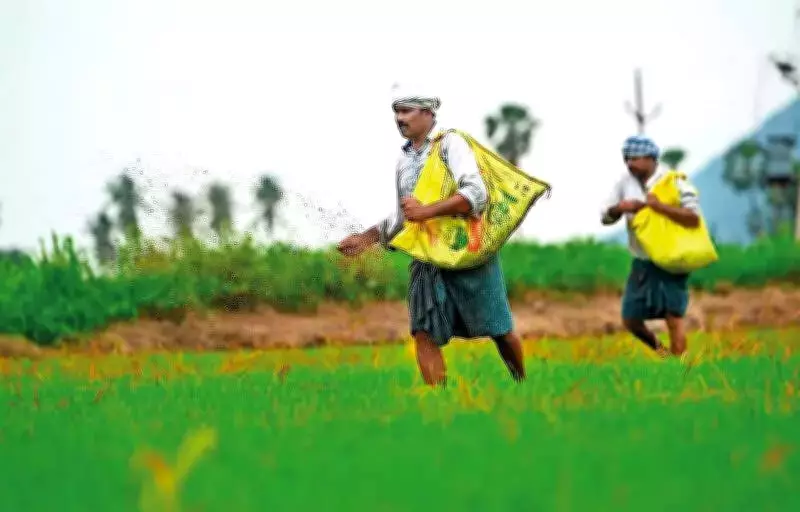
Telangana's Agricultural Funding Crisis: Wealthiest Farmers Corner Disproportionate Share of Rythu Bharosa Funds
As Telangana prepares for its upcoming state budget, a comprehensive analysis has exposed a severe imbalance in the distribution of agricultural support funds, casting serious doubt on the equity and long-term sustainability of the state's flagship farmer assistance program. The Rythu Bharosa scheme, previously known as Rythu Bandhu, has been found to disproportionately favor the wealthiest landowners, leaving marginal and small farmers with a significantly smaller share of financial support.
Stark Imbalance in Fund Distribution
The critical assessment reveals that a mere 1.2% of Telangana's wealthiest farmers have received 21% of the total Rythu Bharosa funds, creating a substantial equity gap in agricultural support. This skewed allocation has resulted in over Rs 18,000 crore being channeled exclusively to affluent farmers over the years, while the vast majority of agricultural households struggle with limited financial assistance.
These findings emerge from the comprehensive study titled 'Telangana Agriculture Livelihoods: The Strategic Choice–Scenarios Across Three Horizons 2024, 2034 and 2047', conducted by the Centre for Sustainable Agriculture (CSA). The research highlights how more than Rs 75,000 crore has been disbursed under direct investment schemes, yet the distribution remains heavily tilted toward large landholders.

Root Causes of the Imbalance
Experts identify the absence of effective caps in the scheme as the primary driver of this imbalance. Financial assistance under Rythu Bharosa is linked directly to the extent of land owned, with an upper limit set at 50 acres. This structure allows large landholders to claim a substantial share of available funds, while marginal farmers with limited land receive proportionally smaller support.
GV Ramanjaneyulu, director of CSA, emphasized the need for reform: "Eligibility should be determined by agricultural household income rather than acreage owned. Needy farmers with limited income end up receiving only a small share under this criteria." He highlighted that approximately 83% of Telangana's farmers own less than 1.3 hectares, or below five acres, yet they receive minimal benefits compared to large landowners.
Comparative Analysis with Other States
The study provides a revealing comparison with other Indian states that implemented similar direct investment support schemes after Telangana pioneered the model. Andhra Pradesh, Odisha, Madhya Pradesh, and West Bengal adopted comparable programs but instituted crucial restrictions at the family-unit level, ensuring tighter control over fund distribution and preventing disproportionate allocation to wealthy farmers.
Telangana's lack of caps has resulted in additional costly consequences. Experts estimate that approximately Rs 22,000 crore was disbursed for land that remained uncultivated over the years, representing a significant waste of agricultural resources and taxpayer money.
Recommended Reforms and Future Projections
To address the growing inequality, agricultural experts propose a pyramid-based allocation model that prioritizes low-income and marginal farmers owning up to one hectare. Ramanjaneyulu explained: "If they are currently receiving Rs 6,000, increasing this to Rs 15,000 would provide them with much-needed additional income, as many do not even engage in allied activities." Additionally, experts strongly recommend capping eligibility at five acres per household to ensure fair distribution.
The urgency for reform is underscored by alarming long-term income projections. The study warns that average monthly incomes of non-wealthy farmers are likely to stagnate at around Rs 11,400 in real terms even by 2047, showing virtually no growth over the coming decades. While nominal incomes may increase from the current Rs 10,800 to Rs 52,000, inflation will erode these gains, leaving real incomes close to Rs 11,000.

The analysis cautions that this income stagnation could force nearly 22% of agricultural families out of farming, threatening the entire sector's viability and potentially creating significant social and economic challenges for Telangana's rural communities.
Broader Implications for Agricultural Policy
This comprehensive assessment comes at a critical juncture as Telangana prepares its state budget and agricultural policymakers consider future directions for farmer support. The findings highlight the need for fundamental restructuring of assistance programs to ensure they genuinely support those most in need while promoting sustainable agricultural development.
The Rythu Bharosa scheme, while innovative in its direct investment approach, requires significant modifications to address the equity concerns raised by this study. Without meaningful reform, Telangana risks perpetuating agricultural inequality and undermining the long-term sustainability of its farming sector, with potentially severe consequences for food security and rural livelihoods.