Telangana Government Defends Commission's Methodology in Kaleshwaram Irrigation Project Probe
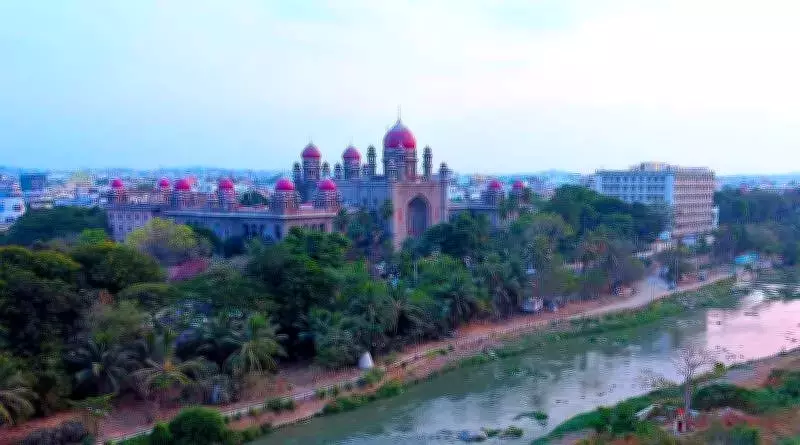
In a significant development at the Telangana High Court, the state government provided a detailed defense of the Justice PC Ghose Commission's investigative approach regarding alleged irregularities in the massive Kaleshwaram irrigation project. Advocate General A Sudarshan Reddy presented the government's position before a bench comprising Chief Justice Aparesh Kumar Singh and Justice GM Mohiuddin on Tuesday.
Commission's Reliance on Official Documentation
The advocate general emphasized that the commission's findings were derived exclusively from official records and materials submitted by both state and central governments, along with various statutory agencies. "No evidence of any person was taken for holding anybody against anyone. The inquiry was purely based on these documents," Reddy stated unequivocally during the proceedings.
He specifically mentioned that the commission had examined documents from authoritative bodies including the National Dam Safety Authority and the Central Water Commission. This clarification came in response to a petition filed by former chief minister K Chandrasekhar Rao, who has sought to quash the commission's report entirely.
Legal Proceedings and Timeline
The court has established a clear timeline for the resolution of multiple petitions related to this matter. The bench directed that all replies in the current petition, along with similar pleas filed by senior IAS officer Smita Sabharwal and former chief secretary SK Joshi, must be concluded by Thursday. Following this, petitioners have been instructed to file their rejoinders to facilitate the completion of arguments.
This development follows the conclusion of submissions by senior counsel Abhishek Manu Singhvi in a related petition filed by former minister T Harish Rao, indicating the breadth of legal challenges surrounding the commission's report.
Defense of Commission's Authority and Scope
Citing established precedents from both the Supreme Court and various high courts regarding commissions of inquiry, the advocate general robustly defended the state's authority to constitute such panels. He highlighted that matters of substantial public importance, particularly concerning a project designed to irrigate over 19 lakh acres while addressing industrial and drinking water needs, fully justified the commission's establishment.
Reddy firmly rejected allegations that the commission's terms of reference were predetermined or biased. In response to judicial questioning, he clarified that the designation "judicial inquiry" was applied solely because a retired judge headed the panel. "Otherwise, it is only a commission appointed under the Commission of Inquiries Act, worked under the Act, acted within the scope of powers given to it under the Act, and submitted its report," he explained.
Financial Irregularities Highlighted
The advocate general referenced critical observations from multiple oversight bodies during his submissions. He specifically flagged the release of ₹2,951 crore for Medigadda construction that occurred without obtaining approval from the cabinet sub-committee. This substantial financial transaction was among the irregularities noted by the National Dam Safety Authority, expert committees, and the Comptroller and Auditor General in their respective assessments.
The court has scheduled the continuation of the advocate general's submissions for Thursday, indicating that further detailed arguments regarding the commission's findings and methodology are forthcoming. The proceedings represent a crucial phase in the legal examination of one of Telangana's most significant infrastructure projects and the investigative process surrounding it.