

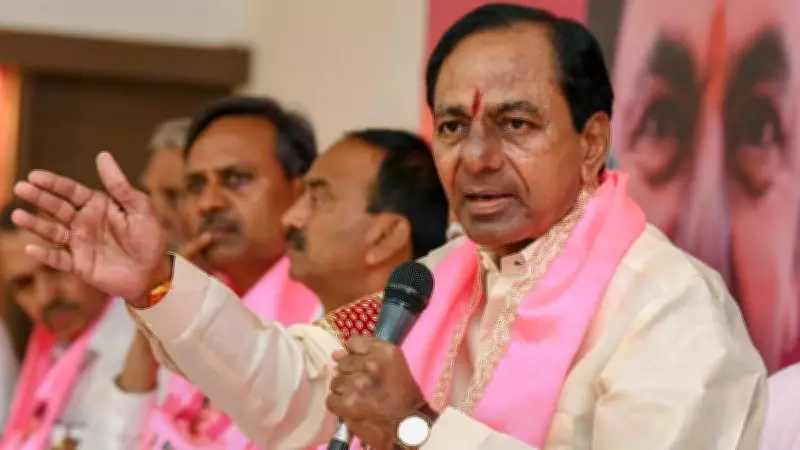
Telangana High Court Delivers Verdict in Kaleshwaram Commission Case
In a significant legal development, the Telangana High Court has provided relief to former Chief Minister K Chandrashekar Rao (KCR) and former minister T Harish Rao. The court has ruled that no action can be taken against them based on the findings of the Kaleshwaram Commission report, which was investigating alleged irregularities in the Kaleshwaram Lift Irrigation Project.
Details of the Court's Ruling
The High Court's decision comes after petitions were filed by KCR and Harish Rao challenging the potential actions against them. The bench, led by Chief Justice Alok Aradhe, stated that the commission's report cannot be used as a basis for initiating any legal proceedings or administrative measures against the petitioners. This ruling effectively halts any immediate steps that might have been contemplated by authorities following the commission's findings.
Background of the Kaleshwaram Commission
The Kaleshwaram Commission was established to probe alleged financial and procedural lapses in the Kaleshwaram Lift Irrigation Project, a multi-billion rupee initiative aimed at providing water to drought-prone regions of Telangana. The project, often hailed as a flagship scheme of the previous BRS government, has been under scrutiny for cost overruns and alleged corruption.

The commission submitted its report earlier this year, which reportedly contained observations and recommendations concerning the roles of key officials, including KCR and Harish Rao, who held the irrigation portfolio. The report's contents had sparked political controversy, with opposition parties demanding action based on its findings.
Legal Arguments and Implications
During the hearings, the petitioners' counsel argued that the commission lacked the jurisdiction to make findings that could lead to criminal or civil liability, as it was constituted as an administrative inquiry rather than a judicial body. They contended that any action based solely on the report would violate principles of natural justice and due process.
The state government, represented by the Advocate General, maintained that the commission's work was aimed at ensuring transparency and accountability in public projects. However, the court emphasized that while commissions of inquiry can recommend further investigation, their reports cannot directly form the basis for punitive actions without proper legal proceedings.
Political Reactions and Future Course
This ruling is expected to have significant political ramifications in Telangana. Supporters of KCR and the BRS party have welcomed the decision, viewing it as a vindication of their leaders. In contrast, critics argue that it may impede efforts to hold public officials accountable for alleged mismanagement in large-scale infrastructure projects.
Legal experts note that the ruling does not preclude other agencies, such as the Enforcement Directorate or the Central Bureau of Investigation, from conducting independent probes into the Kaleshwaram project if they have jurisdiction. However, any such investigations would need to rely on evidence gathered through lawful means, rather than solely on the commission's report.
Conclusion
The Telangana High Court's decision underscores the legal boundaries of commission reports in India's judicial framework. By granting relief to KCR and Harish Rao, the court has highlighted the need for due process in addressing allegations against public figures. This case may set a precedent for how inquiry commission findings are utilized in future legal and administrative actions across the country.






