

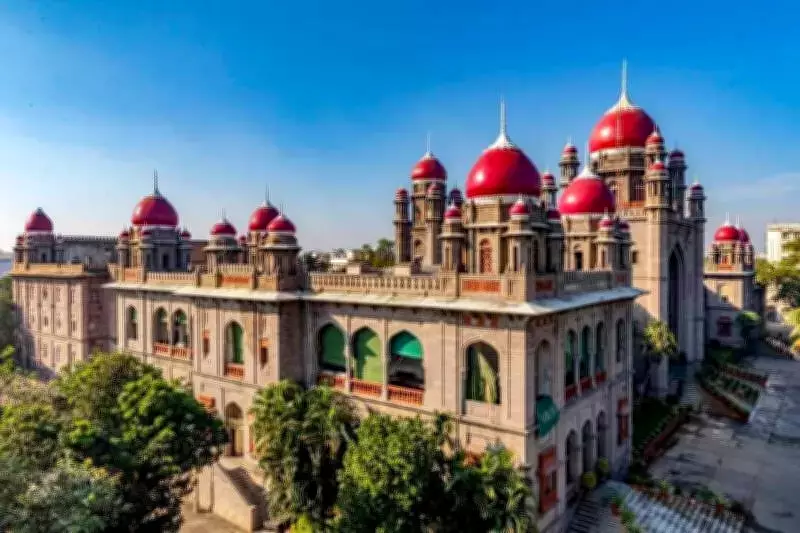
Telangana High Court to Deliver Verdict on Kaleshwaram Project Petitions on April 8
The Telangana High Court is scheduled to pronounce its judgment on April 8 concerning a series of petitions filed by former chief minister K Chandrasekhar Rao and other prominent figures. These petitions directly challenge the findings and procedural aspects of the Justice PC Ghose commission report, which investigated alleged irregularities in the massive Kaleshwaram lift irrigation project.
Bench Concludes Hearings After Six Months of Arguments
A division bench comprising Chief Justice Aparesh Kumar Singh and Justice GM Mohiuddin concluded the extensive hearings on Thursday, reserving the matters for final orders. The proceedings spanned over six months, featuring detailed arguments from both the petitioners' legal teams and the state government's representatives. The bench meticulously examined the complex legal and factual issues surrounding the commission's inquiry and its subsequent report.
Petitioners Challenge Procedural Violations and Reputational Damage
The petitioners, a notable group including KCR, former minister T Harish Rao, senior IAS officer Smita Sabharwal, and former chief secretary SK Joshi, have sought the suspension of the commission's report. Their primary contention revolves around alleged significant procedural violations that they claim have severely damaged their professional reputations and standing.

Senior counsel Dama Seshadri Naidu, representing one of the petitioners, clarified the legal stance. "While we do not dispute the state's constitutional authority to form an inquiry commission, we are vigorously contesting the failure to adhere to mandatory legal procedures," he argued. Naidu emphasized that the commission's findings appeared to follow a state-directed agenda, and the petitioners were kept in the dark about specific allegations until the report was finalized and made public.
Defense of Project Viability and Cost Escalation
Regarding the technical issues that prompted the inquiry, Naidu provided a robust defense. He noted that the investigation was initiated following the sinking of a single pillar among 220, characterizing the state's reaction as disproportionate. He defended the project's rising costs by drawing parallels with other major irrigation works in the Telugu states, such as Nagarjuna Sagar and the Sriram Sagar Project (SRSP), which have also seen similar cost escalations under various governments.
Naidu strongly countered claims labeling the Kaleshwaram project as a colossal failure or a waste of public funds. "The project is operational and currently supplies water for Hyderabad's needs and supports the state government's pet project, the Musi river rejuvenation," he asserted. He further highlighted that central auditors have verified an increase in irrigated land due to the project, contributing to Telangana's status as a leading rice-producing state.
Allegations of Prejudicial Publicity and Procedural Flaws
The petitioners' counsel also challenged the state government for publicizing the commission's report through presentations and press releases before it was formally presented to the legislative assembly. They argued that this action prejudiced the petitioners and undermined the integrity of the judicial process.
Additionally, counsel for Smita Sabharwal and SK Joshi raised specific procedural concerns. They argued that their clients were summoned for informal 'meetings' rather than being served proper statutory notices, violating their fundamental right to reputation and professional standing. During the hearings, the bench questioned whether similar procedural formats were used for the 119 other witnesses and noted the legal implications of classifying them as 'commission witnesses'.
The upcoming verdict on April 8 is highly anticipated, as it will have significant implications for the political landscape, administrative accountability, and the future of large-scale infrastructure projects in Telangana. The decision will address critical questions about procedural fairness, the scope of inquiry commissions, and the balance between state authority and individual rights.






