The Telangana government has announced a revision of property registration values, set to take effect from the first week of May. This decision, aimed at boosting resource mobilisation, was taken by the state cabinet sub-committee on resource mobilisation and ends a year-long pause on the proposed hike. The revision was originally planned last year but was deferred due to a slowdown in the real estate sector and appeals from real estate associations. With market conditions now stabilising, the government has decided to proceed without further delay.
HILT Policy Implementation
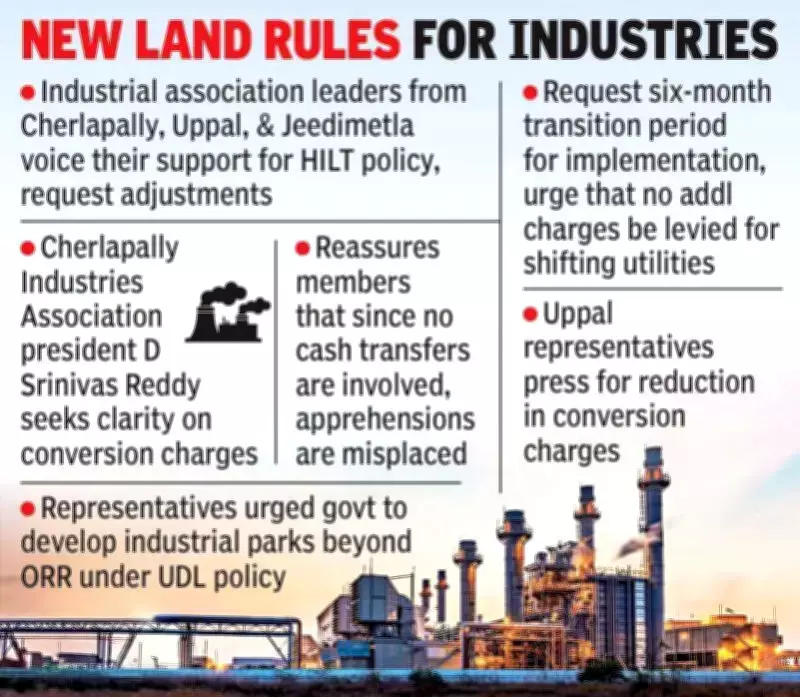
Alongside the registration value revision, the government also discussed the Hyderabad Industrial Land Transformation (HILT) Policy, which will now be implemented. First announced six months ago, the policy had been pending due to the absence of clear guidelines. The HILT policy allows industrial landowners to change land use by paying a prescribed fee to the government.
Review Meeting
Deputy Chief Minister Bhatti Vikramarka, along with ministers N Uttam Kumar Reddy, Sridhar Babu, Jupally Krishna Rao, and others, chaired a review meeting on Friday. They stated that the policy would be implemented democratically, with consultations involving industrial associations to balance the interests of Hyderabad and the state. Representatives from various industrial estates also participated, offering their perspectives.

Industry Concerns
Several industrial representatives raised concerns about pollution and land use. Some suggested relocating polluting industries beyond the Outer Ring Road (ORR), a proposal welcomed by the Deputy CM, who assured that all opinions would be considered. Under the undeveloped land (UDL) policy, Bhatti highlighted the need for joint development efforts involving the Centre, state, and industrial park representatives.
Suggestions included setting up industrial parks between the ORR and the Regional Ring Road, modelled on China's approach. The Deputy CM welcomed these ideas, stressing that the government's priority is development, not disruption. Sridhar Babu added that industries must thrive while ensuring minimal pollution. He noted that the government remains flexible on the HILT policy and revealed that the new industrial policy mandates dormitory facilities for workers.
Looking Ahead
The government has reiterated that before finalising HILT guidelines, inputs from industrial associations will be incorporated. With property registration values set to rise from May 1 and the HILT policy moving towards implementation, the state is signalling a decisive push toward resource mobilisation and industrial transformation, experts said.