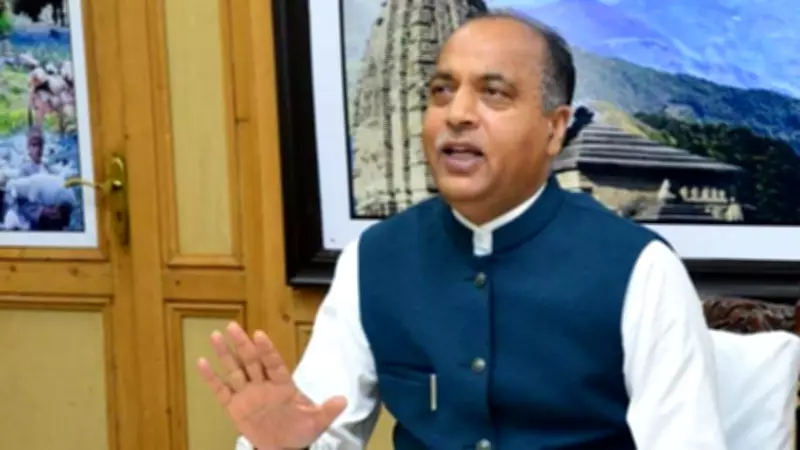
In a sharp critique of the Himachal Pradesh government, Leader of the Opposition Jai Ram Thakur has alleged that the ruling Congress party is intentionally delaying panchayat elections, despite clear directives from the High Court. Thakur, who previously served as chief minister, made these accusations on Wednesday, highlighting what he termed as a deliberate avoidance of the democratic process.
Government's Alleged Evasion of Electoral Duties
Thakur questioned the state government's motives, pointing out that while the High Court had instructed that panchayat polls be conducted before April 30, the administration has instead filed a Special Leave Petition (SLP) in the Supreme Court to challenge this order. He expressed frustration over this move, stating, "The government has finally exposed its intentions. Why was the government pretending to prepare for the elections if it had already decided to challenge the high court order in the Supreme Court, instead of conducting polls on time?" This, according to Thakur, reveals a lack of commitment to timely electoral processes.
Criticism of Chief Minister's Remarks
Further intensifying his attack, Thakur accused Chief Minister Sukhvinder Singh Sukhu of making "unwarranted remarks" regarding the High Court's directions. He noted that despite such comments, the government has allowed reports on electoral roll publication to surface, creating confusion among the public. Thakur challenged the chief minister's earlier assurances, asking, "When the BJP raised questions over the delay, the chief minister and his ministers claimed that elections would be held on time. How long will the government continue to mislead people?" This rhetoric underscores the political tension surrounding the issue.

Impact on Development and Democratic Institutions
Thakur warned that the delay in holding panchayat elections could have severe consequences for development works in Himachal Pradesh. He emphasized that elected local bodies are crucial for the implementation of central schemes, and their absence might stall progress. Additionally, he raised concerns about the state's access to funds allocated for rural and urban local bodies under the 16th Finance Commission, suggesting that financial resources could be jeopardized.
Moreover, Thakur criticized the Congress government for repeatedly ignoring the State Election Commission's directions, accusing it of undermining democratic institutions. He argued that while the government invokes democracy at the national level, its actions at the state level contradict these principles. Thakur claimed that the government's falling popularity is a key factor prompting the deferral of elections, indicating a strategic move to avoid electoral backlash.
Broader Implications for Governance
The ongoing controversy highlights broader issues of governance and accountability in Himachal Pradesh. Thakur's allegations point to a potential erosion of trust in democratic processes, with implications for local governance and public welfare. As the situation unfolds, stakeholders are closely watching how the government responds to these criticisms and whether it will adhere to judicial mandates.
In summary, Jai Ram Thakur's accusations paint a picture of a government at odds with electoral responsibilities, raising questions about its commitment to democratic norms and timely development. The outcome of this dispute could significantly impact the political landscape and administrative efficiency in the state.