

Political Storm Brews Over Tipu Sultan Statue in Malegaon Deputy Mayor's Office
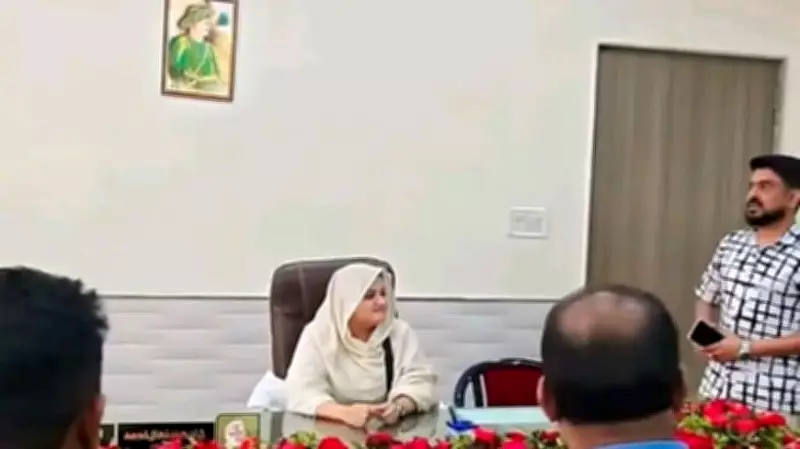
A statue of the 18th-century ruler Tipu Sultan placed in the office of the deputy mayor in Malegaon, Maharashtra, has sparked a heated political controversy, drawing sharp reactions from various political factions and highlighting deep-seated historical and cultural divisions in the region.
Controversy Ignites Over Historical Figure
The statue, installed in the office of Deputy Mayor Abdul Hamid Abdul Rahim, has become a flashpoint for political debate. Leaders from the Bharatiya Janata Party (BJP) have strongly objected to its presence, arguing that Tipu Sultan is a contentious historical figure due to his actions against certain communities during his rule. In contrast, supporters, including members of the Shiv Sena, have defended the statue, emphasizing Tipu Sultan's role as a freedom fighter against British colonial rule and his contributions to the region's history.
Political Reactions and Accusations
The controversy has escalated with BJP leaders accusing the deputy mayor of promoting divisive symbolism and ignoring the sensitivities of local communities. They have called for the removal of the statue, citing it as an attempt to glorify a figure associated with historical conflicts. On the other hand, Shiv Sena representatives have countered these claims, stating that the statue represents cultural heritage and should be respected as part of India's diverse historical narrative. This clash reflects broader political tensions in Maharashtra, where historical symbols often become tools for political mobilization.

Historical Context and Regional Significance
Tipu Sultan, the ruler of the Kingdom of Mysore from 1782 to 1799, is a polarizing figure in Indian history. While he is celebrated for his resistance against British expansion and his administrative reforms, his rule is also criticized for policies that affected certain religious groups. In Malegaon, a city with a significant Muslim population, the statue has taken on added significance, symbolizing cultural pride for some and historical grievance for others. The deputy mayor's decision to display it in his office has thus amplified existing communal and political fault lines in the area.
Impact on Local Governance and Community Relations
The row over the statue has spilled over into local governance, with debates disrupting municipal proceedings and straining inter-community relations in Malegaon. Residents are divided, with some viewing the statue as a rightful tribute to a historical icon, while others see it as an inflammatory gesture. Authorities are now faced with the challenge of balancing freedom of expression with maintaining social harmony, as the controversy threatens to overshadow other pressing civic issues in the city.
Broader Implications for Maharashtra Politics
This incident is not isolated but part of a larger pattern in Maharashtra, where historical figures and symbols frequently become politicized. It underscores how such controversies can be leveraged by political parties to rally support and shape public discourse. As the debate continues, it raises questions about the role of history in contemporary politics and the need for nuanced discussions that acknowledge complex historical legacies without fueling division.
In summary, the Tipu Sultan statue in Malegaon's deputy mayor's office has ignited a fierce political row, reflecting deeper historical and cultural tensions in Maharashtra. With BJP and Shiv Sena at odds, the controversy highlights the ongoing struggle over historical narratives and their impact on modern governance and community relations.






