

West Bengal Political Storm Erupts Over Mamata Banerjee's Murshidabad Violence Remarks
The political atmosphere in West Bengal has intensified dramatically as the ruling Trinamool Congress (TMC) and the opposition Bharatiya Janata Party (BJP) engage in a fierce war of words. The controversy centers on Chief Minister Mamata Banerjee's recent comments regarding violence in the Murshidabad district, with both sides accusing each other of undermining democratic principles in the run-up to the crucial 2026 state assembly elections.
Mamata's Remarks Spark Immediate Backlash
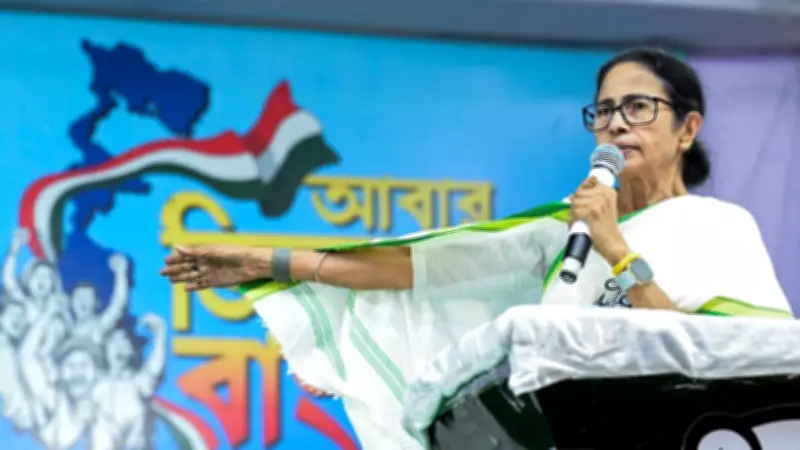
Chief Minister Mamata Banerjee, while addressing a public gathering, made pointed observations about reported incidents of political violence in Murshidabad. She framed these events within a broader narrative of what she termed a "calculated subversion" of the democratic process in the state. The TMC leader suggested that certain forces were deliberately creating unrest to destabilize her government and influence the upcoming electoral battle.
The BJP was quick to condemn these statements, with senior party leaders launching a counterattack. They accused the Chief Minister of attempting to deflect attention from what they described as the TMC's own record of political violence and intimidation. BJP spokespersons argued that Banerjee's remarks were a strategic move to preemptively blame the opposition for any electoral malpractices, thereby undermining the integrity of the democratic exercise itself.

Accusations of Democratic Subversion Fly Both Ways
The exchange has escalated into a full-blown political confrontation, with each party leveling serious allegations against the other. The TMC has doubled down on its position, asserting that the BJP, through its central government and state units, is orchestrating a systematic campaign to erode democratic norms in West Bengal. Party officials cite alleged instances of central agency overreach and what they perceive as biased media coverage as evidence of this "subversion."
Conversely, the BJP has presented its own dossier of complaints. The party highlights numerous reports of violence against its workers and supporters, claiming these are part of a TMC strategy to suppress dissent and maintain a grip on power through fear. They argue that Mamata Banerjee's government has consistently failed to ensure a level playing field, thereby making a mockery of democratic ideals.
Murshidabad: The Epicenter of the Controversy
The focus on Murshidabad is particularly significant. This district has a history of political volatility and is often seen as a bellwether for broader trends in West Bengal politics. Recent incidents of clashes and alleged intimidation there have become a flashpoint, with both parties using them to bolster their respective narratives.
- TMC's Narrative: Portrays the violence as externally instigated to disrupt local governance and tarnish the state's image ahead of elections.
- BJP's Narrative: Depicts the incidents as symptomatic of the ruling party's intolerance and its use of strong-arm tactics to quell opposition.
This dispute over Murshidabad is not merely about isolated events; it is a proxy battle for the larger political soul of West Bengal as it approaches the 2026 polls.
The 2026 Electoral Shadow Looms Large
With the next state assembly elections less than two years away, every political statement and incident is being viewed through an electoral lens. The current controversy over Mamata Banerjee's remarks and the subsequent BJP response is widely interpreted as the opening salvo in what promises to be a highly contentious and closely fought election campaign.

- Both parties are seeking to establish a dominant narrative early, aiming to shape public perception and set the terms of the political debate.
- The charges of "democratic subversion" are potent weapons, designed to rally each party's core base and appeal to undecided voters concerned about political stability.
- The focus on law and order, specifically in districts like Murshidabad, allows both sides to question the other's commitment to constitutional governance.
As the war of words continues, political analysts warn that this heated rhetoric could further polarize the electorate and potentially lead to more ground-level tensions. The coming months will be critical in determining whether this political clash remains confined to verbal sparring or escalates into a more destabilizing conflict that could indeed threaten the democratic process it purports to defend.





