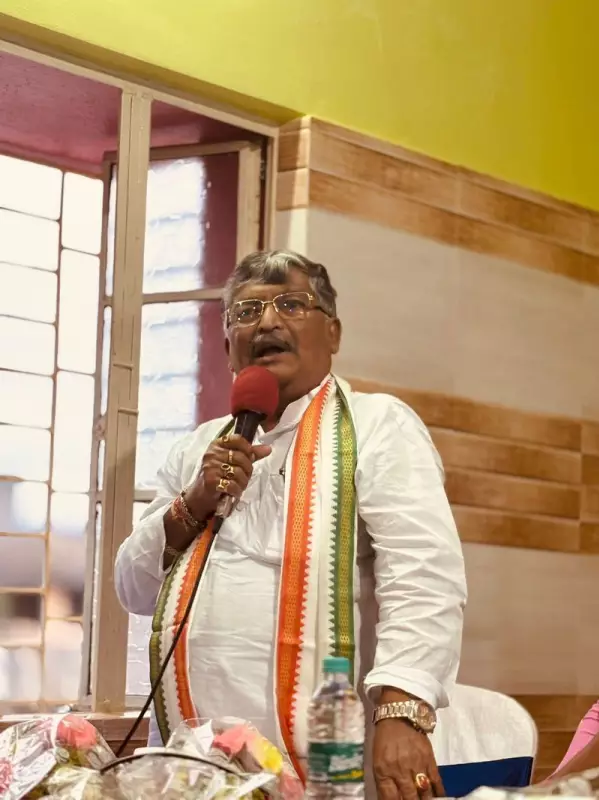
Administrative proceedings in West Bengal's Hooghly district came to a sudden halt on Tuesday after a protest led by a ruling party legislator. The hearings for the selection of Block Land Assistants (BLAs) were suspended indefinitely following a demonstration by Trinamool Congress (TMC) MLA Pavel Kar.
MLA's Demonstration Disrupts Official Proceedings
The incident unfolded at the office of the Hooghly District Magistrate. MLA Pavel Kar, who represents the Uttarpara assembly constituency, staged a protest against the alleged exclusion of candidates from his area from the BLA selection process. His intervention directly led to the suspension of the ongoing 'Sir' hearings, a critical step in the appointment of these local land revenue officials.
Official sources confirmed that the hearings were stopped "for some time" due to the disruption. The protest centered on claims that candidates from the Uttarpara constituency were not being considered for the BLA positions, a charge that has injected a political dimension into what is typically an administrative function.

The Core Issue: Allegations of Exclusion in BLA Appointments
The role of a Block Land Assistant is a significant one at the grassroots level, dealing with land records and related citizen services. The selection process, which includes interviews or 'Sir' hearings, is meant to be conducted by district administration officials. The protest by the TMC MLA underscores the intense political interest and alleged interference in such appointments.
While the exact number of excluded candidates was not specified in initial reports, the MLA's forceful protest was enough to bring the entire process to a standstill. This event raises serious questions about the autonomy of district administrations in West Bengal and the influence of local political figures on bureaucratic recruitment.
Political Fallout and Administrative Standstill
The suspension of hearings has immediate and longer-term consequences. For candidates who were scheduled to appear, the process is now in limbo, causing uncertainty. Administratively, it delays the filling of important positions that facilitate land-related services for the public.
Politically, the incident is likely to be used by opposition parties to criticize the ruling TMC for overreach and obstruction of due process. It highlights the ongoing tensions between political representatives and the executive machinery in the state. The district administration has not yet announced a new date for resuming the hearings, leaving the timeline for resolution unclear.
This disruption in Hooghly is not an isolated event but part of a broader pattern where local governance in West Bengal often finds itself at the intersection of political pressure and administrative duty. The outcome of this standoff will be closely watched as an indicator of where the balance of power currently lies.