

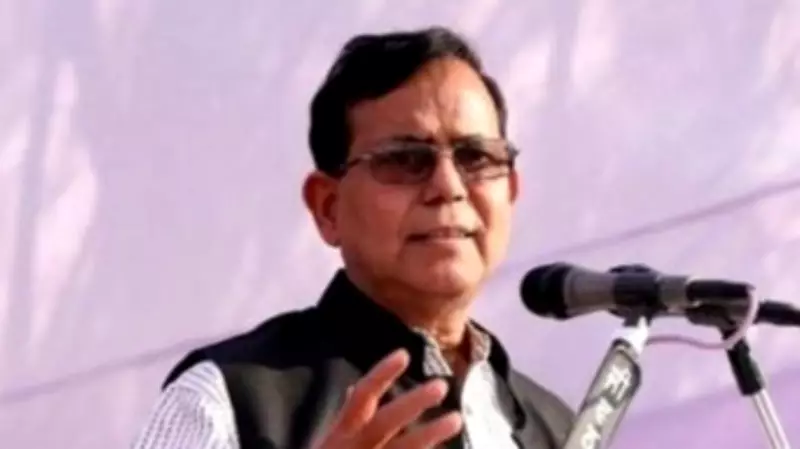
The Trinamool Congress (TMC) has launched a sharp criticism against the Communist Party of India (Marxist) or CPI(M) following a controversial meeting between former TMC leader Salim and CPI(M) leader Kabir. This encounter has ignited widespread speculation about a potential pre-election alliance between the CPI(M) and the Janata Unnayan Party (JUP), a newly formed political entity established by Salim after his suspension from the ruling TMC.
Background of the Political Controversy
Salim, who was previously a prominent member of the TMC, was suspended by the party after he initiated a campaign to construct a 'Babri Mosque' in Murshidabad, a move that sparked significant controversy and led to his expulsion from the ruling party's ranks. Following his suspension, Salim founded the Janata Unnayan Party, positioning himself as a new political force in West Bengal's already complex political landscape.
Details of the Salim-Kabir Meeting
The meeting between Salim and Kabir, a key figure within the CPI(M), has become a focal point of political discourse in the state. Observers and political analysts suggest that this interaction could signal the beginning of a strategic partnership aimed at challenging the TMC's dominance in upcoming elections. The TMC has responded by accusing the CPI(M) of engaging in opportunistic politics and attempting to forge alliances with controversial figures to gain electoral advantage.

TMC's Strong Reaction and Implications
In a strongly worded statement, TMC representatives have condemned the CPI(M) for what they describe as a desperate move to align with Salim's JUP. They argue that such an alliance would undermine democratic values and could potentially polarize the electorate along communal lines, given the sensitive nature of Salim's previous campaign. The TMC has warned that this development could have far-reaching consequences for West Bengal's political stability and social harmony.
Political experts note that if a pre-poll alliance between the CPI(M) and JUP materializes, it could reshape the electoral dynamics in West Bengal, particularly in regions where both parties have significant influence. This potential coalition might aim to consolidate anti-TMC votes, presenting a unified front against the ruling party in future polls.
Future Political Scenarios in West Bengal
As the situation unfolds, all eyes are on how the CPI(M) will respond to the TMC's allegations and whether they will officially confirm or deny the speculation surrounding an alliance with the JUP. The outcome of this political maneuvering could significantly impact voter sentiment and party strategies leading up to the next state elections.
The controversy highlights the ongoing tensions and realignments within West Bengal's political sphere, where parties are continuously exploring new alliances to strengthen their positions. The TMC's vocal opposition to the Salim-Kabir meeting underscores their determination to maintain their political stronghold and counter any threats from emerging coalitions.






