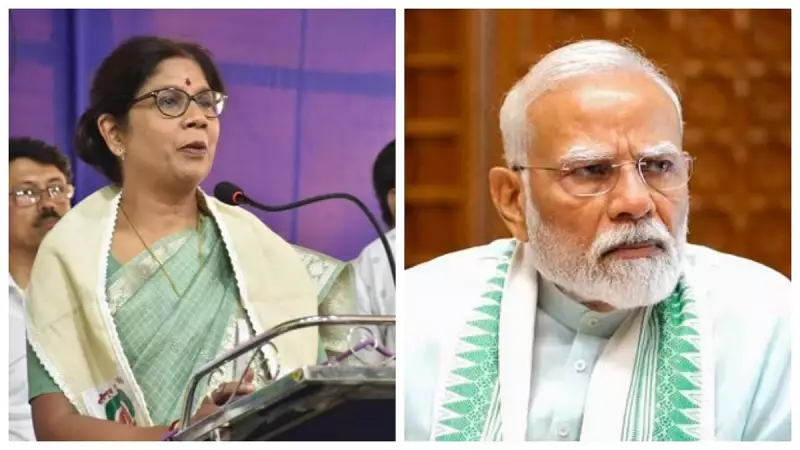
A fresh political controversy has erupted in West Bengal, with the ruling Trinamool Congress (TMC) launching a sharp critique against Prime Minister Narendra Modi and the state's Bharatiya Janata Party (BJP) unit. The party has claimed that the Prime Minister has not been vocal enough against the reported attacks on the minority Hindu community in neighboring Bangladesh.
TMC Minister Counters BJP's Narrative
Senior TMC leader and West Bengal minister, Shashi Panja, spearheaded the attack. She asserted that the state BJP is actively trying to create a false narrative that the TMC has remained silent on the alleged atrocities faced by Hindus in Bangladesh. Panja categorically denied this accusation, stating that her party stands firmly with the sufferers.
The minister's comments, made on 25 December 2025, directly challenge the BJP's positioning on the issue. The TMC's rebuttal suggests a concerted effort to counter the BJP's attempts to frame the narrative around minority safety and political responsiveness in the context of cross-border communal issues.
The Core of the Political Clash
This exchange highlights the intense political rivalry in West Bengal, where both national and state-level issues are fiercely contested. The TMC's strategy involves turning the tables on the BJP by questioning the central leadership's own record on speaking out about the situation in Bangladesh.
By claiming that PM Modi is not vocal on the matter, the TMC aims to neutralize a potential line of attack from the BJP and present itself as a party that is both aware and supportive of the affected community, without ceding the political ground to its opponents.
Implications and Ongoing Debate
The war of words is likely to intensify, with the issue touching upon sensitive topics of minority rights, foreign policy, and domestic political point-scoring. The TMC's assertive stance is designed to:
- Reaffirm its commitment to minority communities.
- Challenge the BJP's self-proclaimed role as the sole protector of Hindu interests.
- Shift the focus of political discourse in the state ahead of future electoral battles.
As per the information available, the debate remains centered on verbal assertions and political positioning, with both parties yet to detail concrete diplomatic or actionable steps taken in response to the events in Bangladesh. The development underscores how international incidents involving religious communities can quickly become fodder for heated domestic political contests, especially in a politically charged state like West Bengal.