

Tamil Nadu 2026 Assembly Elections: A Three-Cornered Political Battle Takes Shape
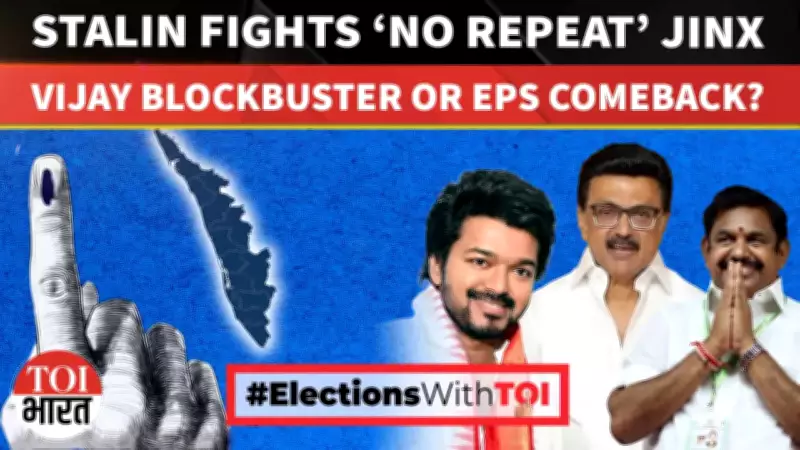
The political landscape of Tamil Nadu is heating up as the 2026 Assembly elections approach, promising one of the most consequential contests in recent state history. Chief Minister M.K. Stalin and his Dravida Munnetra Kazhagam (DMK) are campaigning vigorously to achieve a rare feat: securing a second consecutive term in office. Meanwhile, the principal opposition, the All India Anna Dravida Munnetra Kazhagam (AIADMK), is mobilizing all resources to reclaim power after a five-year hiatus.
The Vijay Factor: A New Dimension in Tamil Nadu Politics
Adding an intriguing layer to this already complex electoral scenario is the formal entry of popular actor Vijay into the political arena through his party, Tamizhaga Vettri Kazhagam (TVK). This development has effectively transformed what was traditionally a bipolar contest into a potential three-cornered fight. Political analysts are closely examining whether Vijay's substantial fan following and clean public image can translate into tangible electoral success, potentially disrupting the established dominance of the DMK and AIADMK.
Examining the 2021 Election Legacy and Current Voter SentimentA comprehensive analysis of the 2021 election trends reveals crucial patterns that may influence the 2026 outcome. The DMK's previous victory was built on a coalition strategy and specific welfare promises. Current ground reports suggest mixed voter sentiment, with some constituencies expressing satisfaction with governance initiatives while others highlight unmet expectations regarding employment, infrastructure, and social justice issues.

Key Electoral Issues and Welfare Politics
Several critical issues are dominating the pre-election discourse in Tamil Nadu:
- Economic Development and Job Creation: With unemployment remaining a persistent concern, all parties are formulating detailed employment generation plans.
- Social Welfare Schemes: The continuation and expansion of popular welfare programs, including women's rights initiatives and educational support, are central to campaign narratives.
- Infrastructure Projects: Completion of ongoing transportation, water management, and urban development projects has become a significant talking point.
- Federal Relations: The state's relationship with the central government and allocation of resources continues to influence political positioning.
Welfare politics, long a cornerstone of Tamil Nadu's political culture, is expected to play a decisive role. Each party is carefully crafting its manifesto to include attractive social security measures, healthcare benefits, and educational subsidies aimed at various demographic groups.
The Role of National Parties: BJP and CongressThe Bharatiya Janata Party (BJP) and Indian National Congress, while not traditionally dominant in Tamil Nadu politics, are actively seeking to expand their influence. The BJP's organizational growth and the Congress's historical alliance with the DMK add further complexity to electoral calculations. Their potential partnerships or independent strategies could significantly affect vote distribution in closely contested constituencies.
Expert Analysis: Who Holds the Current Edge?
Political observers and election analysts are divided in their preliminary assessments. Some experts point to the incumbent advantage of the DMK, highlighting their governance record and established organizational network. Others note the AIADMK's historical resilience and potential for consolidation of anti-incumbency votes. Regarding Vijay's TVK, most analysts agree that while the party may not immediately challenge for majority status, it could certainly play a spoiler role in numerous constituencies, potentially determining the overall outcome.
Regional dynamics are particularly crucial, with northern, western, and southern zones of Tamil Nadu displaying distinct political preferences. Urban-rural divides, caste equations, and local leadership factors will all contribute to the final electoral mathematics.

As campaign activities intensify over the coming months, all three major political forces—DMK, AIADMK, and TVK—will need to refine their strategies, address voter concerns effectively, and build convincing narratives to emerge victorious in what promises to be a landmark election for India's southern powerhouse state.





