

Tamil Nadu 2026 Elections: A Political Landscape in Flux
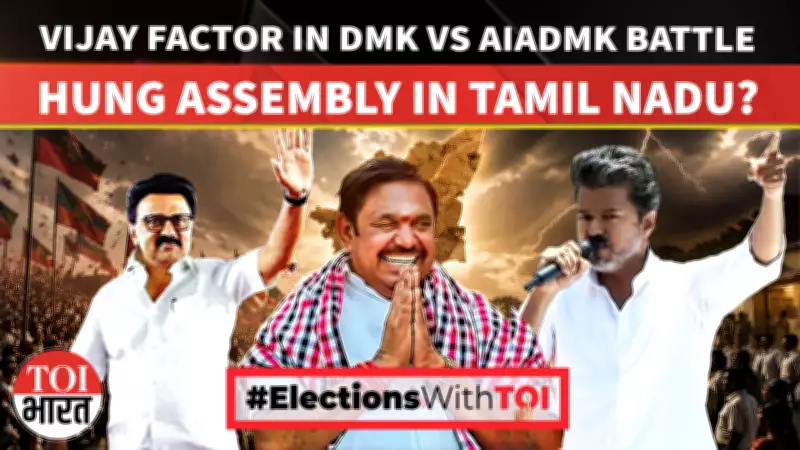
The political arena in Tamil Nadu is intensifying as the 2026 state assembly elections approach, with new variables introducing unprecedented uncertainty. The entry of popular actor Vijay's Tamilaga Vettri Kazhagam (TVK) party has disrupted traditional calculations, raising questions about vote share distribution and potential coalition scenarios.
The Vijay Factor: Screen Charisma Versus Electoral Reality
Vijay's transition from cinema superstar to political contender represents one of the most significant developments in recent Tamil Nadu politics. His TVK party enters the fray with substantial name recognition and a dedicated fan following, but political analysts question whether this popularity will translate into substantial vote share. The critical threshold appears to be whether TVK can capture 25% or more of the total votes, which could dramatically alter the established DMK-AIADMK binary that has dominated state politics for decades.
Hung Assembly Possibility and Alliance Dynamics
The fragmentation of votes among multiple parties increases the likelihood of a hung assembly where no single party secures a clear majority. This scenario would necessitate complex post-election negotiations and potentially unstable coalition governments. The traditional rivalry between the Dravida Munnetra Kazhagam (DMK) and All India Anna Dravida Munnetra Kazhagam (AIADMK) now faces challenges from multiple fronts.

Within the DMK, Udhayanidhi Stalin's rising political profile adds another dimension to the party's strategy. As the son of Chief Minister M.K. Stalin, his increasing visibility and campaign involvement suggest a possible generational transition within the party leadership structure.
BJP's Persistent Struggles and Alliance Optics
The Bharatiya Janata Party continues to face difficulties expanding its footprint beyond its alliance with the AIADMK. Despite national-level prominence, the party has struggled to establish an independent identity in Tamil Nadu politics, often remaining in the shadow of its regional partner. This limitation affects both its electoral prospects and bargaining power in potential coalition scenarios.
Notably, the optics of the DMK-Congress alliance missing a crucial joint rally have raised questions about coordination and messaging between the long-standing partners. Such visible gaps in campaign synchronization could impact voter perception of alliance cohesion and effectiveness.
Delimitation's Long-Term Political Implications
The impending delimitation exercise adds another layer of complexity to Tamil Nadu's political future. This boundary-redrawing process, based on updated population data, could significantly alter constituency compositions and potentially shift political advantages between regions and communities. Political parties are already strategizing around how these changes might affect their traditional strongholds and where new opportunities might emerge.
The combination of these factors—Vijay's political entry, potential vote fragmentation, alliance dynamics, and structural changes through delimitation—creates one of the most unpredictable electoral environments in Tamil Nadu's recent history. As campaigning intensifies, all major players are recalibrating their strategies to navigate this transformed political landscape where traditional assumptions no longer guarantee electoral success.






