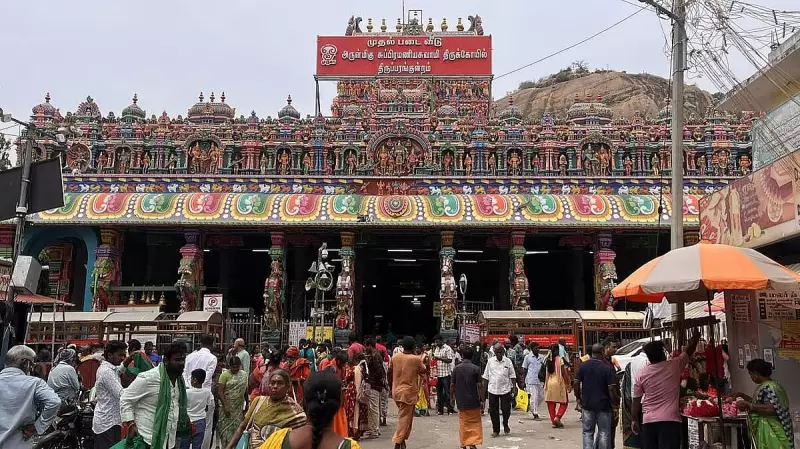
Tamil Nadu's political landscape witnessed a fresh flashpoint as state police registered a case against the Bharatiya Janata Party's (BJP) state president, K. Annamalai, and over a hundred party workers. The charges stem from a protest held on Tuesday regarding the ceremonial lamp lighting at the revered Thiruparankundram Murugan Temple in Madurai.
The Core of the Controversy: A Dispute Over Ritual Rights
The incident, which has sparked a significant political row, revolves around the "deepam" (lamp) lighting ritual at the ancient temple. According to the First Information Report (FIR), the protest led by Annamalai and other BJP functionaries was staged to demand that the right to light the lamp be granted to a person of their choice. The police complaint alleges that the protest was organized without obtaining prior permission from the competent authorities, leading to a potential breach of peace and public order.
The protest took place on April 16, 2024, outside the temple premises. Law enforcement officials have booked a total of 113 individuals, including the high-profile state party chief, under several sections of the Indian Penal Code (IPC).
Legal Charges and Police Action
The Madurai police have invoked multiple sections against the accused. The charges include IPC Section 143 (unlawful assembly), Section 188 (disobedience to order duly promulgated by a public servant), and other relevant provisions. These sections are typically applied in cases where assemblies are deemed unlawful or in violation of official orders meant to ensure public safety.
The filing of this FIR is a direct legal consequence of the demonstration. It signifies the commencement of a formal investigation into the actions of the BJP leaders and workers. The police action underscores the administration's stance on maintaining protocol and order, especially in sensitive religious locations.
Political Repercussions and Broader Implications
This development is set to intensify the ongoing political tussle in Tamil Nadu. The BJP, under Annamalai's leadership, has been actively attempting to expand its footprint in the state, often positioning itself on issues related to Hindu culture and temple management. This case provides fresh ammunition for political discourse, with the party likely to frame the police action as an affront to Hindu religious rights.
Conversely, the ruling Dravida Munnetra Kazhagam (DMK) government and the police administration will defend the move as a necessary step to uphold the law and prevent any unauthorized activities that could disturb communal harmony. The Thiruparankundram temple, being a major pilgrimage site, requires meticulous management of rituals and crowds to avoid any untoward incidents.
The booking of a sitting state president of a national party is a serious step. It brings the issue of religious rituals, political protests, and legal boundaries into sharp focus. The aftermath of this case will be closely watched, as it could influence similar disputes in other temples across the state and set a precedent for how such conflicts are handled by the authorities.
As the legal process unfolds, all eyes will be on the Madurai police's next steps and the response from the BJP's legal and political wings. The incident has undoubtedly added a new chapter to the complex interplay of religion and politics in Tamil Nadu.