Massive 90% Decline in Central Funding for Tamil Nadu Tribal Welfare Department
According to data obtained through the Right to Information Act, the Union government's financial support for Tamil Nadu's Adi Dravidar and Tribal Welfare department has experienced a dramatic 90% reduction in recent years. The figures, disclosed by the department in response to a query by RTI activist S Karthik, reveal a concerning trend of diminishing central allocations for marginalized communities.
Staggering Drop in Financial Allocations
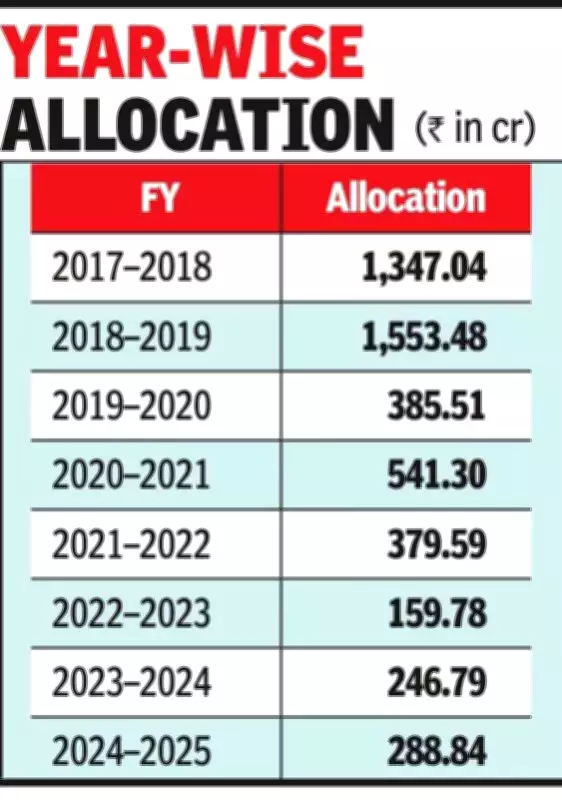
The data indicates that between the 2014-15 and 2024-25 fiscal years, the Centre allocated a total of Rs6,998.82 crore to the department. However, this assistance peaked during the 2018-2019 fiscal year with an allocation of Rs1,553.48 crore, only to plummet to a record low of just Rs159.78 crore by the 2022-2023 fiscal year.
Although there was a slight adjustment in the following year, the allocation for 2024-2025 remains a mere Rs288.84 crore, representing a staggering drop compared to six years ago. This dramatic reduction has raised serious concerns about the welfare and development of Tamil Nadu's Adi Dravidar and tribal communities.
Impact on Critical Development Sectors
RTI activist S Karthik told media outlets that the consistent withdrawal of financial support has directly impacted critical sectors including education, employment, and infrastructure development for the Adi Dravidar and tribal communities. Many ongoing projects aimed at their upliftment are now stalled due to lack of adequate central grants.
"The funding reduction has created a crisis situation for development projects targeting marginalized communities," Karthik emphasized. "We're seeing educational initiatives, employment programs, and infrastructure projects that were designed to bridge social gaps now facing indefinite delays."
Calls for Financial Monitoring and Increased Allocation
In response to these findings, Karthik has demanded the establishment of a finance monitoring committee consisting of social activists, educationists, and an economist to monitor funds from the Centre and ensure their proper utilization for sector-specific projects. He emphasized that such oversight is crucial for transparency and accountability in welfare spending.
The activist has urged the Union government to prioritize the welfare of Tamil Nadu's marginalized communities by ensuring a minimum annual allocation of at least Rs1,500 crore. He has also called upon Chief Minister M K Stalin to exert pressure on the Centre to restore adequate funding levels for these critical welfare programs.
Bureaucratic Apathy and Systemic Issues
Former vice-chairman of Tamil Nadu State Commission for SCs & STs Punitha Pandiyan has accused bureaucratic apathy and what he describes as an anti-dalit mentality for contributing to the current situation. He highlighted systemic problems within the administrative machinery that hinder effective welfare implementation.
"Bureaucrats should be sensitized to the problems faced by dalits, and how to handle them," Pandiyan stated. "During my time in the commission, I witnessed many officials who did not even know how to produce a proper report regarding dalit issues. They often use terminology that should not be used in official documentation."
Pandiyan emphasized that awareness needs to extend across all administrative levels, from tahsildars to IAS officers, regarding the core problems dalits face. He noted that ministers typically learn about fund allocation and utilization from their respective departments only if the concerned bureaucrat properly informs them, creating potential gaps in oversight and understanding.
Broader Implications for Social Welfare
The dramatic funding reduction comes at a time when marginalized communities in Tamil Nadu continue to face significant social and economic challenges. The data suggests a worrying trend of decreasing central support for state-level welfare initiatives targeting historically disadvantaged groups.
Experts warn that sustained underfunding could reverse years of progress in social inclusion and development for Adi Dravidar and tribal populations. The situation highlights the complex interplay between central allocations, state implementation, and ground-level impact on vulnerable communities.
As the debate over federal funding distribution continues, activists and former officials alike are calling for renewed attention to the welfare needs of Tamil Nadu's marginalized populations and more consistent financial support from the Union government to address longstanding social inequalities.