TVK Accuses DMK of Misleading Voters with Coupon Flyers for Illatharasi Scheme
In a significant political development in Trichy, actor Vijay's Tamilaga Vettri Kazhagam (TVK) has raised strong objections to the DMK's campaign promoting its proposed Illatharasi scheme. The party alleges that coupon-style flyers distributed by DMK workers are misleading voters and constitute a clear violation of election norms. This controversy has ignited tensions in rural areas, particularly in the Srirangam segment, where the distribution of these materials has become a focal point of contention.
Allegations of Voter Influence and ECI Violations
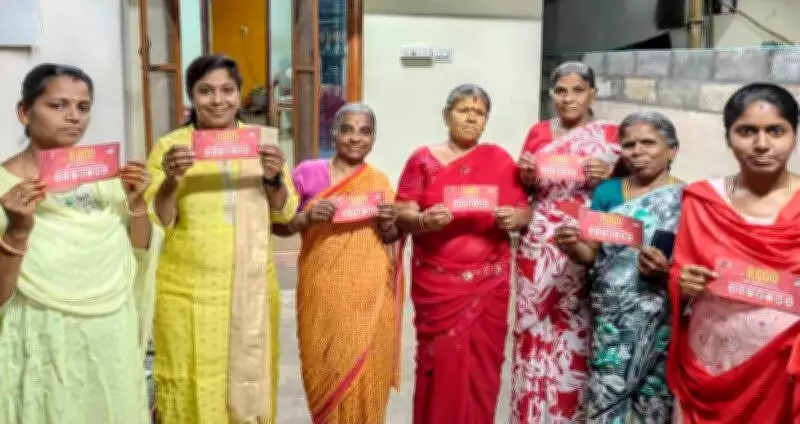
TVK has formally claimed that the distribution of model coupons in rural regions is specifically aimed at influencing women voters. The Illatharasi scheme promises ₹8,000 coupons to eligible families for purchasing household appliances, and TVK argues that the campaign materials create confusion among rural women, encouraging them to support the DMK. In response, TVK has urgently appealed to the Election Commission of India (ECI) to treat this as a serious violation of electoral conduct.
S Ramesh, TVK's Srirangam candidate, emphasized the issue by drawing a parallel to his own party's promises. He stated, "The coupons are confusing rural women and encouraging them to support DMK. Even our leader has promised 8 grams of gold as marriage assistance—will the ECI allow us to distribute imitation jewellery to promote that?" This rhetorical question underscores TVK's contention that the DMK's actions set a dangerous precedent for campaign tactics.

DMK's Defense and Campaign Details
The DMK, however, has defended its actions, asserting that it obtained prior permission from the ECI for the campaign material. A DMK functionary explained that the coupons are merely illustrative and not actual vouchers. "The scheme has not been implemented yet. There are no tie-ups with brands or showrooms. The flyer is just a model to explain the proposal," he clarified. This defense highlights the party's position that the materials are educational rather than coercive.
In practice, DMK workers in rural areas, such as Thirumalaisamudram panchayat in the Srirangam segment, have been actively distributing flyers and pamphlets. These materials promote alliance candidates and highlight six key manifesto promises. Additionally, a separate coupon-themed flyer lists products that could be purchased under the Illatharasi scheme, including televisions, washing machines, refrigerators, and induction stoves. Workers have been explaining to women how the ₹8,000 token could be utilized, further intensifying TVK's concerns about voter manipulation.
Escalating Tensions and Official Responses
The dispute has led to reported clashes, notably in Kumbakonam, where TVK functionaries allegedly attempted to stop DMK workers from distributing the pamphlets. This incident underscores the heightened political tensions surrounding the campaign methods. TVK has also alleged that complaints filed through the cVIGIL app were closed without proper resolution, adding to their grievances about enforcement of election norms.
On the official front, Srirangam Returning Officer N Srinivasan provided a contrasting perspective. After investigations, he stated, "Our teams visited the spot, but no distribution of actual coupons was reported. Only pamphlets appear to have been circulated." This finding suggests that while the materials may be provocative, they might not technically breach ECI guidelines if they are indeed just explanatory pamphlets as claimed by the DMK.
Broader Implications for Election Campaigning
This controversy raises important questions about the boundaries of political campaigning in India. The use of illustrative materials to promote proposed schemes, especially those involving financial benefits, can blur the lines between information dissemination and undue influence. As parties like TVK and DMK navigate these gray areas, the ECI's role in monitoring and adjudicating such disputes becomes crucial to maintaining fair electoral practices.

The situation in Trichy reflects a microcosm of larger political strategies, where targeting specific voter demographics, such as rural women, through tangible promises has become a common tactic. However, the allegations of misleading content highlight the need for clearer regulations and vigilant oversight to prevent potential abuses that could undermine the integrity of the democratic process.