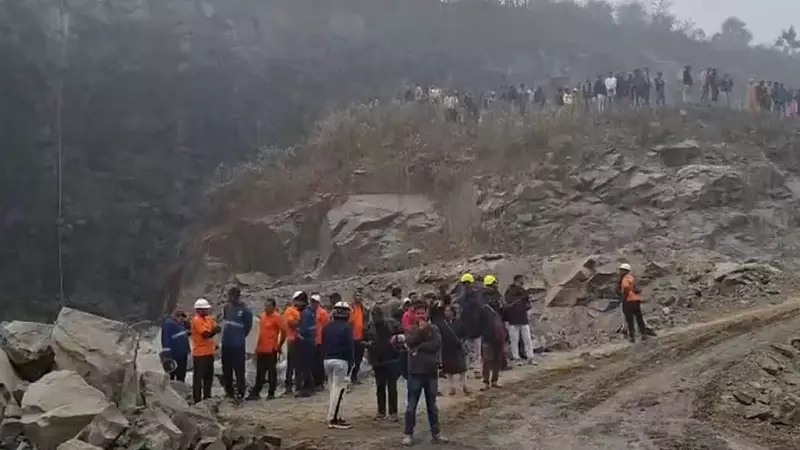
A tragic incident at an illegal stone quarry in Odisha's Dhenkanal district has claimed the lives of two workers. The fatal accident occurred due to a sudden collapse of a rock wall, highlighting the grave dangers associated with unauthorised mining operations.
Details of the Dhenkanal Quarry Tragedy
The incident took place on a Saturday in the Bhuban area under the jurisdiction of the Kamakshyanagar police station. According to local authorities, the victims were labourers working at the site when a massive section of the quarry's rock face gave way without warning. The men were reportedly engaged in extracting stone blocks when the collapse buried them under tons of debris.
Police officials confirmed that the quarry was operating without any legal authorisation or safety clearances. The site lacked the most basic safety protocols and structural reinforcements necessary to prevent such disasters. Upon receiving information, a team from the Kamakshyanagar police station rushed to the remote location to initiate rescue operations.

Police Response and Investigation
Local law enforcement has launched a thorough investigation into the circumstances leading to the fatal collapse. The bodies of the two deceased workers were recovered from the site and sent for post-mortem examination. The police are working to establish the complete sequence of events and identify all parties responsible for operating the illegal quarry.
An official from the Kamakshyanagar police station stated that the primary focus is on determining the ownership of the quarry land and pinpointing those who employed the workers. The investigation will also scrutinise why the unauthorised mining activity was allowed to continue unchecked in the area, posing a constant threat to worker safety.
Broader Implications and Safety Concerns
This tragic event has once again cast a harsh spotlight on the perilous conditions prevalent in illegal mining operations across several states in India. These sites routinely bypass all regulatory frameworks, including environmental norms and, most critically, worker safety regulations. Labourers, often from economically vulnerable backgrounds, are forced to work in extremely hazardous environments without protective gear or emergency contingency plans.
The incident in Dhenkanal raises serious questions about the monitoring and enforcement mechanisms meant to curb such illegal activities. It underscores an urgent need for stricter surveillance by local administration and mining departments to identify and shut down these dangerous operations before more lives are lost. Community awareness about the risks of working in such quarries is also crucial.
The families of the deceased are now facing an uncertain future, having lost their primary breadwinners in a preventable tragedy. This case is expected to prompt calls for more stringent action against illegal quarry operators and for better protection and compensation for workers in the unorganised mining sector.