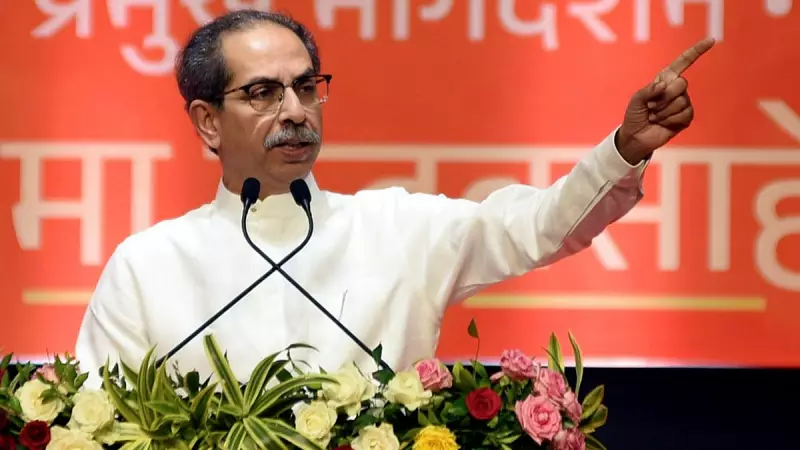
Shiv Sena (UBT) leader Uddhav Thackeray has made a significant statement, asserting that his party represents more than just a political entity but is fundamentally an idea that cannot be erased by the Bharatiya Janata Party (BJP). This declaration comes in the wake of the BJP's performance in the recent Brihanmumbai Municipal Corporation (BMC) elections, where they emerged as the single largest party.
Uddhav Thackeray's firm stance on Shiv Sena (UBT)'s identity
Uddhav Thackeray emphasized that Shiv Sena (UBT) transcends the conventional boundaries of a political party. He stated that it embodies a core ideology and set of principles that have deep roots in Maharashtra's political landscape. According to Thackeray, this makes the party resilient against attempts by the BJP to diminish its influence or existence.
Context of the BMC election results
The backdrop to Thackeray's remarks is the January 15 elections for the Brihanmumbai Municipal Corporation, a crucial civic body in Mumbai. In these elections, the BJP secured 89 seats out of the total 227-member House, positioning itself as the largest party. This outcome has sparked discussions about the shifting dynamics in Mumbai's local governance and the broader political scenario in Maharashtra.

Political implications and reactions
Thackeray's comments highlight the ongoing political rivalry between Shiv Sena (UBT) and the BJP, especially in the context of Maharashtra's complex political environment. By framing Shiv Sena (UBT) as an "idea," Thackeray aims to reinforce its ideological foundation and appeal to its support base, suggesting that the party's relevance is not solely dependent on electoral victories or defeats.
This perspective underscores a strategic move to maintain morale among party workers and supporters following the BMC election results. It also signals a continued commitment to the party's core values and objectives, regardless of the BJP's electoral gains.
Analysis of the statement's significance
Uddhav Thackeray's assertion can be seen as an effort to redefine the narrative around Shiv Sena (UBT) in the face of political challenges. By emphasizing the party as an idea, he shifts the focus from mere electoral politics to a broader ideological struggle. This approach may resonate with voters who identify with the party's historical and cultural ethos in Maharashtra.
Moreover, this statement reflects the intense competition and verbal sparring that characterize Indian politics, particularly in states like Maharashtra where multiple parties vie for dominance. It sets the stage for future political maneuvers and alliances as parties prepare for upcoming state and national elections.
In summary, Uddhav Thackeray's remarks serve as a reminder of the enduring nature of political ideologies in India's democratic framework. They highlight how parties like Shiv Sena (UBT) leverage their foundational principles to navigate electoral setbacks and sustain their political relevance over time.