In a strong show of dissent, labourers and agricultural workers' unions staged protests in Bathinda on Friday, branding the recently passed Viksit Bharat Guarantee for Rozgar and Aajeevika Mission (Gramin) Bill as a "retrograde legislation." The demonstrators took the symbolic step of burning copies of the bill, which replaces the long-standing Mahatma Gandhi National Rural Employment Guarantee Act (MGNREGA).
Why Protesters Are Calling It a Betrayal
The core grievance of the protesters is that the new legislation strips rural workers and peasant households of their statutory right to employment, a guarantee enshrined under MGNREGA. Unions, including the Punjab Khet Mazdoor Union, Mazdoor Mukti Morcha, Pendu Mazdoor Union, and Sanyukt Kisan Morcha (SKM), argued that instead of repealing MGNREGA, the Union government should enact a similar law to tackle acute urban unemployment.
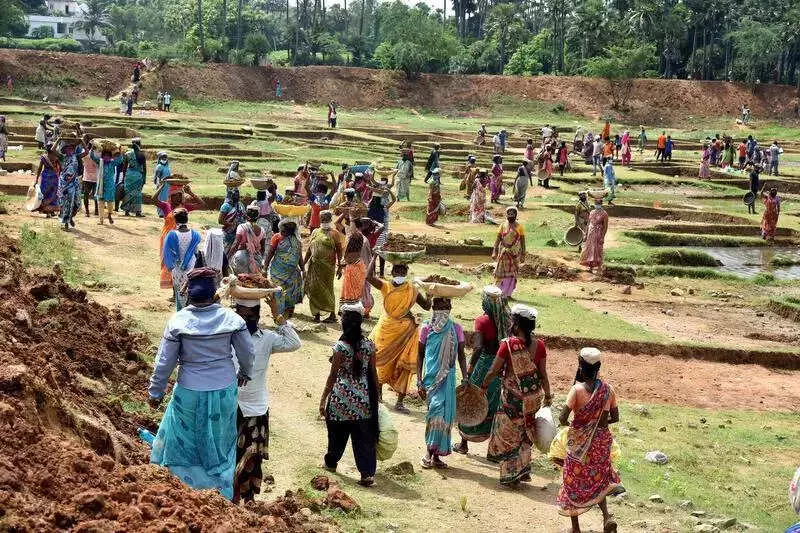
Punjab Khet Mazdoor Union president Jora Singh Nasrali and general secretary Lachman Sewewala elaborated that MGNREGA was not merely an employment scheme. They stated it was a demand-based program crucial for developing rural infrastructure like roads, irrigation, drinking water, and agro-processing. They accused the government of sidelining these needs by transforming it into an investment-driven program aligned with corporate interests.

Specific Demands and Wider Implications
The unions presented a clear set of demands for protecting and strengthening MGNREGA. They called for an amendment to provide 200 days of work annually and a minimum wage of at least Rs 700 per day for a dignified life. They also urged linking the scheme with agriculture to address the agrarian crisis, rural indebtedness, distress migration, and farmer suicides.
The protesters highlighted that women form a large section of MGNREGA workers, making the repeal a massive assault on their employment and income. Furthermore, they criticized the VB-GRAG bill as part of a series of laws, like the Seeds Bill and Labour Codes, that undermine fiscal federalism by making state governments subservient to the Centre.
Financial Burden on States
The unions pointed out a practical hurdle: state governments, already facing an acute financial crisis due to GST reforms, cannot afford to bear 40% of the cost of providing employment, which would amount to thousands of crores of rupees. They argued this move is against the constitutional spirit of federalism.
The protest in Bathinda underscores a significant clash over the future of social welfare and employment guarantees in India, with workers demanding the preservation of their hard-won statutory rights.