Uttar Pradesh Government Upholds Supreme Court Loudspeaker Directives During Ramzan
The Uttar Pradesh government has issued a definitive clarification regarding the use of loudspeakers in mosques throughout the holy month of Ramzan. According to official statements, all existing Supreme Court directives concerning sound restrictions remain fully applicable and enforceable during this period.
Opposition Raises Concerns in State Assembly
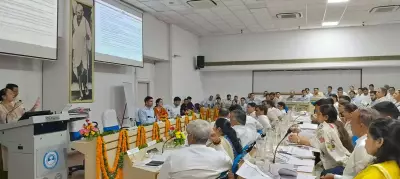
During the Zero Hour session of the Uttar Pradesh Legislative Assembly, Samajwadi Party member Kamal Akhtar formally raised the issue of loudspeaker usage in mosques. Akhtar passionately urged the state government to permit mosques to broadcast announcements for sehri (the pre-dawn meal) and iftar (the meal to break the daily fast) throughout Ramzan, which commenced on Thursday.
Akhtar presented a comparative argument, noting that festivals from various religions—including Hindu celebrations like Holi, Diwali, and Dussehra, the Kanwar Yatra pilgrimage, as well as Christian and Sikh observances—are all accommodated within the state. He emphasized that mosques should similarly be allowed to utilize loudspeakers during Ramzan for brief, traditional announcements that inform fasting individuals about the precise timings for sehri and iftar.

The opposition member further claimed that the government had recently undertaken efforts to remove loudspeakers from numerous religious sites across Uttar Pradesh. He appealed to the administration to grant a specific exemption for mosque announcements during Ramzan, arguing this would provide much-needed relief to the Muslim community observing the fast.
Government Cites Supreme Court Order in Response
In a detailed response, Finance and Parliamentary Affairs Minister Suresh Kumar Khanna firmly reiterated the government's adherence to the Supreme Court's established guidelines. Minister Khanna explicitly stated that the apex court has clearly directed that loudspeakers must not be used after 10:00 PM under any circumstances.
The Supreme Court's prohibition specifically covers the use of loudspeakers, public address systems, and all other sound-producing instruments between the hours of 10:00 PM and 6:00 AM. The only exceptions to this rule apply within closed premises such as auditoriums, conference rooms, and banquet halls, where such systems may be used strictly for internal communication purposes.
Minister Khanna provided a practical example, noting that even at wedding ceremonies, local police authorities ensure strict compliance with these time restrictions if any complaints are received regarding loudspeaker usage beyond the stipulated hours.
Historical Context and Modern Alternatives Discussed
Addressing the traditional practice of mosque announcements for sehri and iftar, Minister Khanna offered historical context. He explained that this custom originated during an era when clocks were not commonly available, and people primarily estimated time based on the sun's position.
"In today's modern world, nearly every individual—whether a rickshaw puller, a street vendor, or a vegetable seller—possesses a mobile phone that displays accurate time. Therefore, the original necessity for such announcements no longer exists," Khanna stated emphatically.
The minister further clarified that while the Uttar Pradesh government does not interfere with anyone's personal religious beliefs or practices, the Supreme Court has established definitive rules governing loudspeaker usage. "These are not our orders; these are the directives of the Supreme Court, which we are obligated to follow," he added.
Continued Disagreement and Legislative Impasse
Despite the government's firm stance, Kamal Akhtar maintained his position during the Assembly session. He argued that the Supreme Court's order primarily relates to regulating sound levels and noise pollution, rather than imposing an absolute prohibition on loudspeaker usage.
Akhtar once again urged Minister Khanna and the state government to reconsider their position and allow mosque announcements specifically during the Ramzan period. Following this exchange, the minister did not offer any further reply, leaving the matter at an impasse within the legislative body.

The Uttar Pradesh government's clarification reinforces its commitment to enforcing national judicial directives uniformly across all religious communities, while opposition voices continue to advocate for cultural and religious accommodations during significant observances like Ramzan.