

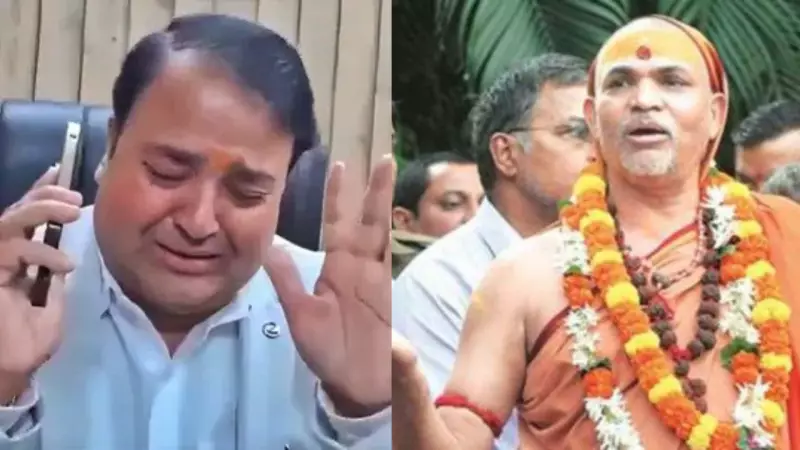
Senior UP Tax Official Resigns in Solidarity with Modi, Yogi Administration
In a significant development that has intensified an ongoing political-religious confrontation in Uttar Pradesh, a senior tax officer submitted his resignation on Tuesday, expressing unwavering support for Prime Minister Narendra Modi, Union Home Minister Amit Shah, and Chief Minister Yogi Adityanath. This move directly countered a protest resignation by another government officer just one day earlier, highlighting deepening divisions within the state's administrative machinery.
Emotional Resignation from Ayodhya GST Deputy Commissioner
Prashant Singh, serving as the Deputy Commissioner of GST in Ayodhya, formally tendered his resignation to the Governor of Uttar Pradesh. In his resignation letter, Singh stated that recent remarks made by Swami Avimukteshwaranand against the Prime Minister, Chief Minister, and Home Minister had profoundly hurt his sentiments. The officer declared his intention to dedicate himself to social work following his departure from government service.
A video capturing Singh's emotional state, where he appeared tearful while discussing his decision, quickly circulated across various social media platforms, amplifying the impact of his resignation.

Counter-Resignation Following Bareilly Magistrate's Protest
Singh's resignation came precisely one day after Alankar Agnihotri, the City Magistrate of Bareilly, resigned from his position on Monday. Agnihotri's resignation was a protest against the newly implemented University Grants Commission regulations and what he described as disrespect shown toward Swami Avimukteshwaranand by authorities in Prayagraj.
Despite efforts by senior officials to persuade Agnihotri to reconsider and withdraw his resignation, he remained steadfast in his decision. Reports indicate he was seen carrying posters critical of the Bharatiya Janata Party, further politicizing his exit from service.
"Rajkiya Dharma": Officer Cites Constitutional Duty
In his detailed resignation letter, GST officer Prashant Singh articulated his reasoning with strong constitutional language. He wrote, "The government provided me with employment, enabling me to support my family. Therefore, I believe it is my 'rajkiya dharma' (political duty) to adhere to the rules governing state employees and to formally register my protest against the insult directed at the state government, the Chief Minister, and the Prime Minister."
Singh went further to characterize Avimukteshwaranand's comments about Chief Minister Adityanath as "against the Constitution and democratic principles." He also accused the seer of actively encouraging government employees to oppose the current administration, thereby creating internal discord.
Roots of the Conflict: Magh Mela Incident in Prayagraj
The current standoff traces its origins to events during the Magh Mela in Prayagraj. On January 18, which coincided with Mauni Amavasya, police personnel allegedly prevented Swami Avimukteshwaranand and his followers from proceeding in a ceremonial chariot to perform a ritual dip in the Ganges River. Following this incident, the seer publicly criticized Chief Minister Yogi Adityanath in strong terms.
The situation escalated the very next day when the mela administration issued an official notice to Avimukteshwaranand. The notice demanded an explanation for why he was projecting himself as the Shankaracharya of Jyotish Peeth, despite a Supreme Court order that prohibits any formal enthronement until a pending appeal is conclusively decided.
Ongoing Protest and Demands
Since receiving the notice, Swami Avimukteshwaranand has maintained a protest vigil outside his camp at the mela site. His protest has taken an austere form, with the seer reportedly abstaining from food and water. His primary demands include formal apologies from senior mela administration officials and police personnel involved in the January 18 incident.
This series of resignations and the underlying religious-political dispute underscores the complex interplay between administration, politics, and religious sentiment in Uttar Pradesh, with potential implications for governance and public order.






