

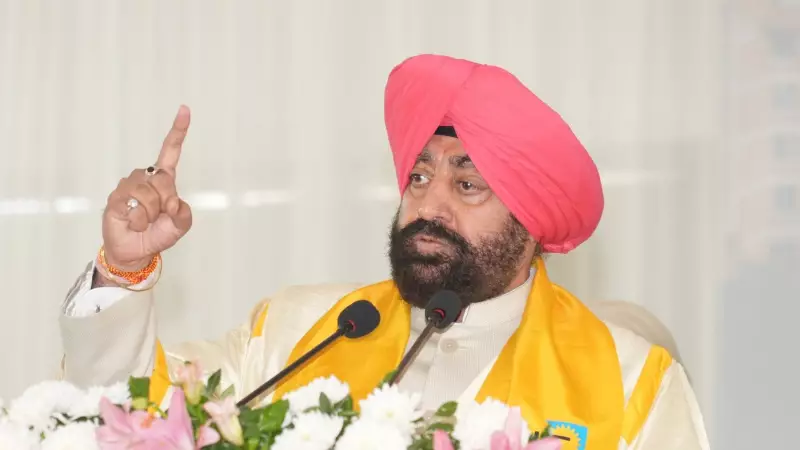
In a significant move, Uttarakhand Governor Lt Gen (retd) Gurmit Singh has returned a Bill seeking to amend the state's anti-conversion law to the government. This marks the first instance of him returning a Bill since assuming office in 2021. The action, citing "clerical errors and repetitions," has ignited a political debate, with the Opposition questioning the grounds while government officials indicate the amendments will now be implemented through an ordinance.
A Decorated Veteran's Unprecedented Move
The returned legislation was the Freedom of Religion (Amendment) Bill, 2025, which aimed to introduce stricter punishments for violations under the existing 2018 Act. Governor Singh's decision, communicated earlier this week, has drawn attention because of his consistent approval of other contentious Bills in the past. These include the Uniform Civil Code Act Rules, the Minority Education Act that abolished the Madrasa Board, and the Uttarakhand Competitive Examination Ordinance, 2023.
Senior state government officials have stated that the amendments will be pushed through via an ordinance. However, the Opposition has been quick to point out that the Governor did not return the Bill on substantive Constitutional grounds, but rather for technical shortcomings in the drafting.

Profile: From Army Deputy Chief to Raj Bhavan
Lt Gen (retd) Gurmit Singh, born in 1956 in Amritsar, hails from a distinguished defence family. His father served in the Army and his brother in the Air Force. An alumnus of the National Defence Academy (NDA) in Khadakwasla, he furthered his education at the National Defence University in Washington DC, USA, and its counterpart in Taiwan.
His nearly four-decade Army career was illustrious. He served as the Deputy Chief of Army Staff before retiring in 2019. His postings included a decade in Uttarakhand's Banbasa and a stint as the commander of the strategic XV Corps, overseeing operations at the Line of Control in Kashmir. As Additional Director-General of Military Operations, he handled strategic issues concerning China, a subject he also researched as a fellow at Jawaharlal Nehru University.
His service is decorated with four Presidential awards and top military honours, including the Param Vishisht Seva Medal and the Uttam Yudh Seva Medal.
Political Appointments and Opposition Criticism
Singh's appointment as Governor in September 2021, just six months ahead of the Uttarakhand Assembly polls, was viewed through a political lens. Many saw it as the BJP's outreach to the state's Sikh community, which numbers around 2.3 lakh as per the 2011 Census, and as a counter to the Aam Aadmi Party's projection of a retired Army colonel as its chief ministerial face.
The Opposition has been critical of his tenure. Suryakant Dhasmana, state Congress vice-president, labelled him a "token representation of the BJP," accusing him of speaking about nationalism and Prime Minister Narendra Modi predominantly around election time.
Indresh Maikhuri of the CPI(M-L) Liberation highlighted that the Governor's return of the Bill was not on Constitutional grounds. He also alleged Singh was "ineffective" during the Banbhoolpura tensions in February 2024, where police firing led to five deaths, claiming the Governor did not work towards a resolution despite holding a Constitutional position.
The return of the anti-conversion Bill, a first from a Governor who has previously assented to major legislative changes, adds a new chapter to the ongoing discourse on the role of Raj Bhavan in state politics and the legislative process.






