

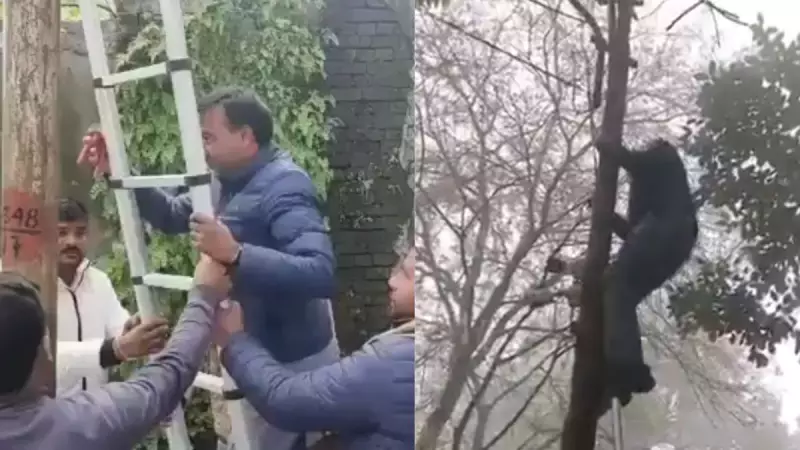
In a bold and unconventional act of protest, Congress MLA Virendra Singh from Haridwar, Uttarakhand, took matters into his own hands to highlight the severe and persistent issue of power outages plaguing his constituency. Frustrated by the administration's failure to ensure a stable electricity supply, the MLA directly ordered the disconnection of power to the residential colonies housing government officials.
A Desperate Act for Public Grievance
The incident, which quickly gained traction on social media, occurred as a direct response to the immense public suffering caused by erratic and prolonged power cuts. Virendra Singh, representing the Haridwar Rural assembly constituency, arrived at the local power department office accompanied by a group of supporters. He expressed his deep annoyance with the situation, stating that while the common people were enduring hours without electricity, the officials responsible for the infrastructure were living in comfort.
The MLA explicitly instructed the junior engineers (JEs) of the electricity department to immediately cut off the power supply to the colonies where the officials themselves resided. His demand was clear: the officials should experience the same hardships faced by the public they are meant to serve. This dramatic step was intended to force the administration to acknowledge and urgently address the crumbling power infrastructure in the region.

The Root of the Problem: Infrastructure and Accountability
The power crisis in parts of Uttarakhand, especially in Haridwar, is not a new phenomenon. Residents have long complained about frequent and unscheduled outages that disrupt daily life, affect businesses, and pose challenges during extreme weather. The MLA's protest underscores a growing public sentiment that the authorities have been ineffective in finding a permanent solution.
Virendra Singh's action points to a significant gap in accountability. By targeting the homes of the officials, he highlighted the disparity between the experiences of the decision-makers and the citizens. The protest suggests that the problem may stem from a combination of aging infrastructure, inadequate maintenance, and perhaps a lack of political will to invest in substantial upgrades. The MLA's move was a public attempt to bridge this accountability gap by making the crisis personal for those in charge.
Public Reaction and Political Implications
The video of the incident sparked widespread discussion. Many citizens applauded the MLA for his direct action, seeing it as a rare instance of a politician forcefully championing a common man's issue. It resonated with the daily frustrations of thousands of households and businesses dependent on a reliable power supply.
However, the act also raises questions about the methods of protest and the operational independence of public utilities. While the gesture was symbolic, it also involved directing government staff to take an action that was, technically, an official order. The incident places the state's power department and the government in a difficult position, forcing them to respond not just to the power crisis but also to the method of protest.
The state government now faces increased pressure to provide a concrete plan and timeline for improving the power supply situation in Haridwar and other affected areas. The MLA's stunt has successfully amplified the issue on a larger platform, ensuring it cannot be easily ignored. The political ramifications will depend on how quickly and effectively the ruling dispensation can now act to resolve the underlying infrastructure problems.
This event serves as a stark reminder of the critical importance of basic utilities in governance. It underscores that public patience wears thin when essential services like electricity remain unreliable. The ball is now in the court of the Uttarakhand administration to demonstrate that such drastic public protests are not needed for their attention, and that systemic solutions will be implemented with urgency.






