V V Swaminathan: A Dravidian Stalwart Enters His Centennial Year
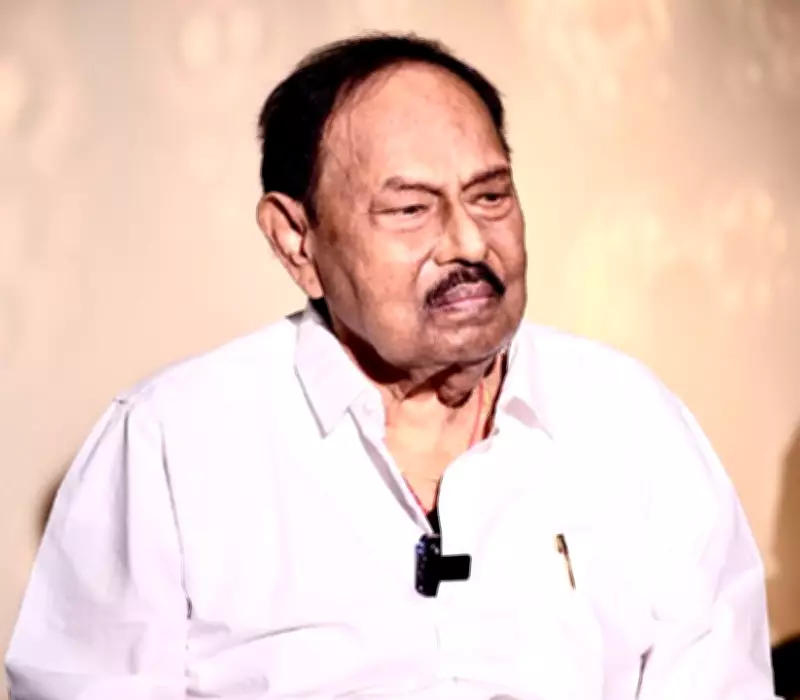
When the initials 'VVS' are mentioned, many might first think of cricketing legend V V S Laxman. However, in the political arena of Tamil Nadu, another VVS stands tall: V V Swaminathan, a distinguished Dravidian leader, former MLA, MP, and minister, who embarked on his 100th year on February 15, 2026. The celebration is not merely about his remarkable longevity but also his inspiring public life and dedicated service to society, marking him as a beacon of integrity and statesmanship.
Early Life and Political Awakening
Born in 1927 in Vilvarayanallur Village, near Kumbakonam in the erstwhile Thanjavur district, Swaminathan displayed an early interest in politics. While still a school student, he actively participated in the 'Quit India Movement' against British colonial rule. His patriotism was deeply influenced by the Dravidian movement, spearheaded by leaders like Periyar and Anna. After pursuing higher education, he earned a law degree and was enrolled as an advocate in 1954. Under the mentorship of the late V T Rangaswami Iyengar, former public prosecutor of the Madras High Court, Swaminathan honed his skills through hard work and courtroom expertise, laying a strong foundation for his future endeavors.
Rise in Politics and Grassroots Innovations
In 1964, at the age of 37, Swaminathan was elected as the chairman of the Chidambaram municipality from the Dravida Munnetra Kazhagam (DMK). This victory was notably praised by the revered Arignar Anna, who wrote an appreciation for him in his famous series 'Thambikku Kaditham' (Letter to Brother), published in 'Dravida Nadu', and even hosted a dinner in his honor at his home in Kanchipuram. As municipal chairman, Swaminathan introduced a groundbreaking concept: a 'complaint box' for citizens to lodge grievances. This initiative, a first in Tamil Nadu, distinguished him from other public officials of his era by fostering accountability at the grassroots level. His political acumen and people-centric approach earned him the trust of thousands.

Under his leadership, the Chidambaram municipality implemented an underground sewerage system and received the 'Best Municipality' award from then Chief Minister M Bakthavatsalam for successful distribution of drinking water. These achievements underscored his commitment to urban development and public welfare.
Ministerial Tenure and Multifaceted Leadership
Within the Dravidian movement, Swaminathan was acclaimed as a 'Man of Steel'. Impressed by his multifaceted personality, M. Karunanidhi nominated him to the Rajya Sabha in 1972. Despite his close association with Karunanidhi, his ties with M G Ramachandran (MGR) grew stronger. In 1978, MGR appointed him as an MP, and he soon became a close aide and confidante of the leader. Before completing his Rajya Sabha term, MGR urged him to contest state elections, leading to his election as MLA from the Bhuvanagiri constituency in 1980 and again in 1984. Swaminathan also served as a minister in MGR's cabinet, achieving the incredulous feat of holding 13 ministerial portfolios simultaneously. He expertly headed departments including electricity, prohibition & excise, HR&CE, information, publicity and cinemas, tourism, veterinary, dairy development, registration, stamps & chit funds, forest, planning, archaeology, the Wakf board, and handloom & textiles. During Janaki Ramachandran's tenure, he concurrently managed the ministries of HR&CE and the Waqf board.
Landmark Contributions and Legacy
Swaminathan's far-sighted thinking, sanguinity, and composure enabled him to excel in all his endeavors. Key milestones in his career include:

- Establishing the first veterinary university of its kind in Asia in Tamil Nadu.
- Installing a statue of Bharathiyar in New Delhi and allocating land for the Tamil Nadu Wakf Board's head office.
- Restoring the 'aaru kaala poojai' (six-times ritual worship) at Sri Arulmigu Dandathuyuthapaniswami Temple in Palani.
- Retrieving the right for all communities to chant Thevaram and Tiruvasagam hymns in 1987.
- Recovering stolen idols of Rajaraja Cholan and Cholamaha Devi from the Thanjavur Peruvudaiyar Temple.
He also advocated for bringing Tamil Nadu Minerals Limited (TAMIN) under state control, believing it served the greater good by managing natural minerals. His egalitarian principles led to the abolition of the Karnamaniyam posts and the introduction of 'village administrative officers' (VAOs), promoting greater and equal citizen participation.
Enduring Impact and Philosophical Reflections
With 87 years of devoted public life, Swaminathan serves as a living bridge between past and present. As he enters his centennial year, he exemplifies that one can attain positions of power without resorting to questionable means, embodying the qualities of a statesman politician with rectitude and tenacity. Echoing the American philosopher Garry Gutting's insight that good politicians should have intellectual lives, Swaminathan stands as a glowing example of this principle.
Notable Firsts and Cultural Contributions
Swaminathan's legacy includes several pioneering efforts:
- He presented the 'Sama Needhi Kanda Cholan' statue to the Madras High Court, depicting Chola King Ellalan's unfailing justice.
- He facilitated the release of Saint Tyagaraja's Telugu keerthanas in Tamil, overcoming resistance from music directors who deemed it sinful.
- He played a key role in establishing the Press Club in Tamil Nadu, fostering media development.
As V V Swaminathan celebrates this milestone, his life reminds us of the enduring power of public service and ethical leadership in shaping society.