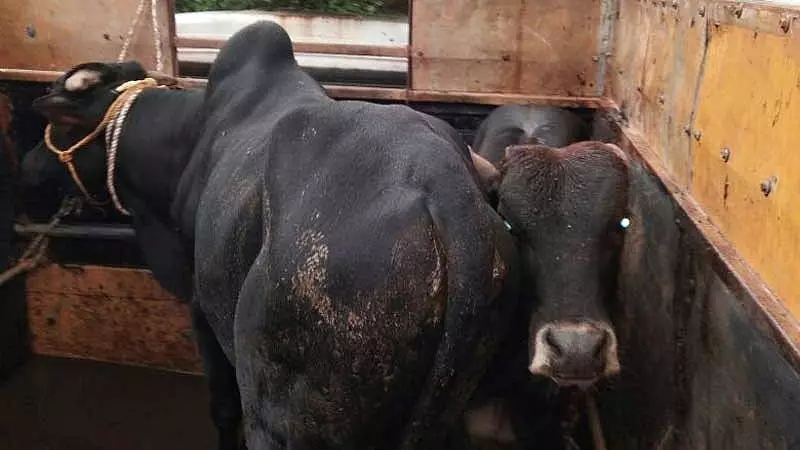
The Vishwa Hindu Parishad (VHP) has issued a stern warning to the Congress-led government in Karnataka, threatening to launch a massive statewide agitation if it proceeds with plans to amend a key law regulating cattle transport. The proposed changes to the Karnataka Prevention of Slaughter and Preservation of Cattle Act, 2020, have sparked a major political and cultural controversy.
VHP's Stern Ultimatum to the State Government
The VHP's state unit has made its position unequivocally clear. The organization has given the government a deadline until June 20 to publicly withdraw its proposal to amend the cattle transport legislation. Failure to do so, the VHP warns, will result in an intense and widespread protest movement across Karnataka. The group alleges that the proposed amendments would effectively nullify the existing law, opening the floodgates for illegal cattle slaughter and trade.
VHP's state secretary, Suryanarayana Rao, articulated the organization's core concerns. He argued that diluting the law would not only harm the cattle population but also severely impact farmers who depend on these animals for agriculture. Rao emphasized that cattle are integral to Indian culture and rural economy, and weakening their protection is unacceptable.
The Contentious Proposed Amendments
The heart of the dispute lies in specific changes the government is reportedly considering. The current Act mandates that anyone transporting cattle must obtain a permit from a competent authority, a rule aimed at preventing illegal movement for slaughter. The proposed amendment seeks to remove this permit requirement for the transport of cattle for agricultural or dairy purposes.
While the government frames this as a move to ease genuine difficulties faced by farmers and dairy producers, groups like the VHP see it as a dangerous loophole. They fear that without the mandatory permit system, it would become impossible to distinguish between legal transport for farming and illegal smuggling for slaughterhouses. The VHP leadership asserts that this change would render the entire Act toothless and defeat its original purpose of preservation.
Political Repercussions and Broader Implications
This issue has quickly escalated beyond a legal debate into a potent political flashpoint. The VHP is mobilizing its grassroots network and plans to rally other like-minded organizations to build pressure on the state administration. The threat of a statewide stir indicates the potential for significant public disruption if the standoff is not resolved.
The controversy also touches upon deeper socio-cultural sensitivities in Karnataka. The previous BJP government had enacted the stricter law, positioning it as a commitment to protecting cattle, which are revered by many communities. Any move by the current government to alter this law is being framed by its opponents as an affront to these sentiments and a compromise on core principles for political expediency.
The government now finds itself in a delicate position, balancing practical concerns of the agricultural sector against strong ideological opposition. Its decision by June 20 will likely have significant consequences for law and order, political stability, and its own credibility among various voter bases. All eyes are on Bengaluru as the deadline approaches, with the potential for Karnataka to witness a major confrontation over policy and belief.