The West Bengal government has taken decisive action to address stalled development initiatives across the state by deploying a network of observers to oversee critical projects. This strategic move comes as the ongoing Special Intensive Revision (SIR) of electoral rolls has significantly occupied local administrative officials, creating bottlenecks in the implementation of various government schemes.
Administrative Response to SIR-Induced Delays
According to official sources, the state administration has deputed micro-observers to monitor development work in 23 specific areas throughout West Bengal. While the deployment is not officially designated for the SIR process, it is directly linked to the situation where local officers have been extensively engaged in electoral revision duties for over two months.
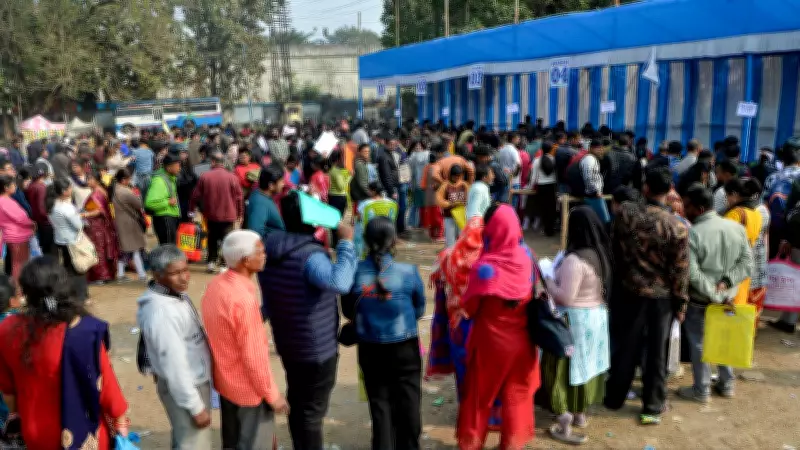
Block Development Officers, Sub-Divisional Officers, and district magistrates have been particularly occupied with SIR responsibilities, with their offices even being utilized for SIR hearings. This has resulted in numerous development projects being put on hold, creating what senior officials describe as a "main headache for state administration."

Political Implications and Development Priorities
A senior official revealed that the ruling party is concerned about potential political consequences if key developmental works remain incomplete. "If developmental works such as road construction, drinking-water projects and issuing certificates are not completed before any assembly elections are announced after SIR, it could harm the government," the official stated, emphasizing that "state administration can't stop development work."
The order specifies that senior state officials have been deployed across different districts and areas to oversee various development schemes, including the flagship programs Amader Para Amader Samadhan and Pathashree. These officers are mandated to visit field locations and coordinate closely with the concerned district magistrates of their assigned areas.
Observer Deployment Structure
The observer framework operates at multiple levels:
- Special Role Observers: The commission previously appointed former IAS officer Subrata Gupta as a special-role observer
- Role Observers: Initially 12 role observers were appointed in Bengal at the start of SIR, with five additional observers later recruited from Delhi
- Expanded Monitoring: Over time, the commission increased the number of observers by adding 16 more, bringing the current total to 34 observers monitoring SIR work across the state
- Micro-Observers: Approximately 7,000 micro-observers are overseeing the hearing process at each hearing table
District-Wise Observer Assignments
The government has made specific assignments for different regions:
- Kolkata (South): IAS officer Rajesh Kumar Sinha
- South 24 Parganas: Onkar Singh Meena
- Paschim Bardhaman, Murshidabad and Malda: Vandana Vadav, Parwez Ahmad Siddiqui and Choten D Lama respectively
- Kolkata (North) and Nadia: Santanu Basu and P. B. Salim
- Darjeeling (excluding Siliguri) and Kalimpong: Saumitra Mohan
- Bankura, Purulia and Purba Bardhaman: P. Mohan Gandhi, Sanjay Bansal and Shubhanjan Das
- Hooghly and Howrah: IAS officers Antara Acharya and Sharad Kumar Dwivedi
- North 24 Parganas, Jhargram and Paschim Medinipur: P. Ulagnathan, Kaushik Bhattacharya and Pawan Kadyan
- Siliguri subdivision (Darjeeling): Rajarshi Mitra
- Dakshin Dinajpur and Purba Medinipur: Chaitali Chakrabarti and Rajat Nanda respectively
Additionally, four WBCS officers have been deputed as observers: Bidhan Chandra Ray for Coochbehar, Purnendu Kumar Majhi for Birbhum, Sunil Agarwal for Jalpaiguri and Alipurduar, and Tanvir Afzal for Uttar Dinajpur.

Broader Context and Administrative Strategy
This observer deployment represents a proactive administrative strategy to maintain development momentum during the intensive electoral revision period. The dual-track approach allows the SIR process to continue efficiently while ensuring that essential development projects do not suffer prolonged delays.
The situation highlights the complex balancing act state administrations must perform between electoral responsibilities and ongoing development commitments. With local officials deeply involved in SIR duties, the central deployment of observers serves as a temporary administrative bridge to keep critical infrastructure and welfare projects moving forward.
As West Bengal navigates this challenging period, the effectiveness of this observer system will be closely monitored, particularly regarding its impact on accelerating stalled projects and maintaining public service delivery during the electoral revision process.