

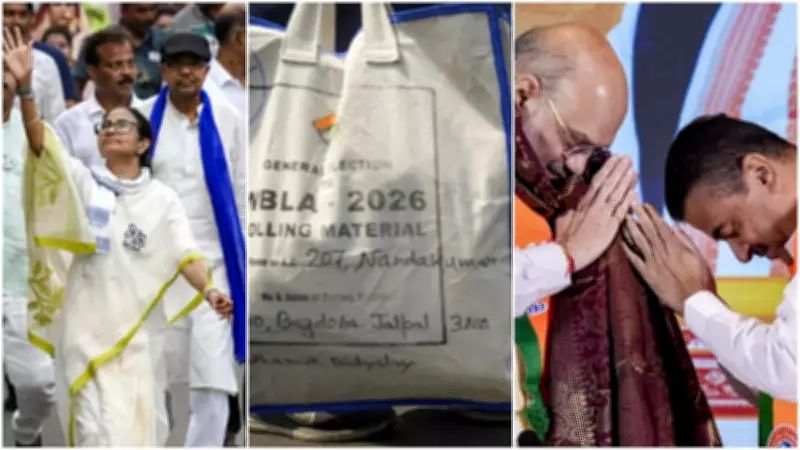
West Bengal Assembly Elections 2026: The Battle for 15 Crucial Seats
As the West Bengal Assembly Elections of 2026 approach, political analysts are closely monitoring a set of key constituencies that could determine the fate of the state's governance. The electoral landscape is marked by intense rivalries, with Chief Minister Mamata Banerjee's Trinamool Congress (TMC) defending its stronghold against the rising clout of BJP leader Suvendu Adhikari.
High-Stakes Constituencies Under the Spotlight
Fifteen seats have emerged as focal points in this politically charged contest. These constituencies are not just geographical areas but symbols of broader political narratives and voter sentiments.
- Bhabanipur: Mamata Banerjee's home turf, a bastion of TMC support and a test of her personal popularity.
- Nandigram: A historic battleground where Suvendu Adhikari's influence is pivotal, having shifted allegiances from TMC to BJP.
- Ballygunge: An urban seat in Kolkata, reflecting the party dynamics in the state capital.
- Kolkata Port: A constituency with significant economic and logistical importance.
- Diamond Harbour: Represented by Abhishek Banerjee, showcasing the next generation of TMC leadership.
- Murshidabad: A region with a diverse demographic, often a swing area in past elections.
- Jadavpur: Known for its academic and intellectual voter base, influencing policy debates.
- Kharagpur Sadar: An industrial and educational hub, highlighting development issues.
- Baharampur: A traditional Congress stronghold, now contested by TMC and BJP.
- Mathabhanga (SC): A reserved seat, crucial for gauging support among Scheduled Caste communities.
- Panihati: A suburban area near Kolkata, reflecting urban-rural divide dynamics.
- Gaighata: A constituency with agricultural and rural focus, key for farmer votes.
- Sandeshkhali: Recently in news for political tensions, making it a volatile seat.
- Asansol Dakshin: An industrial region, important for labor and economic policies.
- Bhangar: A seat with historical political significance, often a bellwether for regional trends.
Key Candidates and Their Impact
The elections feature prominent candidates whose performances could sway results. Mamata Banerjee's leadership in Bhabanipur is under scrutiny, as any slip could signal vulnerability. Conversely, Suvendu Adhikari's campaign in Nandigram and beyond is seen as a litmus test for BJP's expansion in Bengal. Other notable figures include Abhishek Banerjee in Diamond Harbour, whose role as TMC's national general secretary adds weight to his constituency battle.

CPI(M) candidates, though less dominant than in previous years, remain contenders in seats like Jadavpur and Baharampur, potentially splitting votes and affecting the TMC-BJP duel. The SIR (Suvendu Influence Region) effect refers to Adhikari's ability to mobilize support in specific areas, particularly in South Bengal, which could tip the balance in closely fought seats.
How These Seats Could Shape the Election Outcome
These 15 seats are microcosms of larger electoral trends. Victories in urban centers like Kolkata Port and Ballygunge may indicate BJP's penetration in cities, while rural wins in Gaighata or Sandeshkhali could reinforce TMC's grassroots strength. The reserved seat of Mathabhanga will reveal party appeals to marginalized communities, a critical factor in a state with significant SC/ST populations.
Analysts predict that the cumulative results from these constituencies will not only determine the assembly's composition but also set the tone for future political realignments in West Bengal. With high voter turnout expected, every seat counts in what is poised to be one of India's most watched state elections in 2026.
As the campaign intensifies, these 15 seats will be barometers of public opinion, reflecting the complex interplay of local issues, candidate charisma, and national party strategies. The outcome here could redefine West Bengal's political landscape for years to come.






