The Constitutional Anomaly of Maharashtra's Deputy Chief Minister
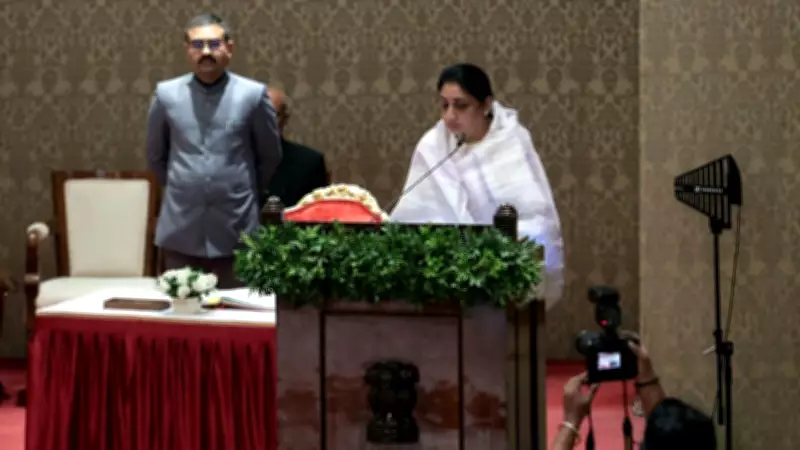
With the historic swearing-in of Sunetra Pawar as Maharashtra's 13th Deputy Chief Minister and the first woman to hold this position, political observers are once again examining a role that exists without any formal mention in the Indian Constitution. This development brings renewed focus on how a position lacking constitutional authority has transformed into a vital instrument for managing coalition dynamics and distributing political influence within Maharashtra's government.
The Legal Reality Versus Political Necessity
The Constitution of India provides for a Council of Ministers headed by the Chief Minister, but conspicuously omits any reference to a Deputy Chief Minister. In strict legal terms, a Deputy CM is merely a Cabinet minister appointed under Article 164 who receives an additional title from the ruling party or coalition. The position carries no separate constitutional powers and does not officially rank above other Cabinet ministers in the governmental hierarchy.
Despite this constitutional absence, the post has flourished for compelling political reasons. Governments strategically appoint Deputy Chief Ministers to achieve multiple objectives: balancing coalition partners, managing rival leaders within political parties, providing representation to specific regions or communities, and signaling how power is being distributed within the administration. As coalition governments became increasingly common following the decline of single-party dominance, this position emerged as a practical mechanism for distributing authority without altering the formal structure of government.

The Evolution of Deputy Chief Ministers in Maharashtra
Maharashtra first established the post of Deputy Chief Minister in 1978 during a period of political instability, with Nashikrao Tirpude assuming the role. This was followed by brief tenures under Congress and breakaway Congress regimes. However, the position gained substantial political weight in 1995 when Gopinath Munde served as Deputy CM in the Shiv Sena-BJP coalition government, transforming it from a mere balancing act into a genuine center of authority.
The office became institutionalized as a power-sharing device during the Congress-NCP coalitions that governed after 1999. Prominent leaders including Chhagan Bhujbal, R R Patil, and especially Ajit Pawar—who holds the record as the longest-serving Deputy CM—utilized the position as a significant base of political influence. Since 2019, fractured electoral mandates and party splits have led to experiments with multiple Deputy CMs simultaneously, featuring figures such as Devendra Fadnavis and Eknath Shinde. The current appointment of Sunetra Pawar marks a new chapter, highlighting how this role has evolved from a temporary political adjustment into a central instrument of coalition management and power distribution in Maharashtra.
Why This Position Matters More in Maharashtra
The Deputy Chief Minister's role carries greater significance in Maharashtra compared to many other Indian states due to the distinctive structure of power in the region. Maharashtra has experienced prolonged periods of coalition governance, making power-sharing arrangements essential for political stability. Consequently, Deputy Chief Ministers have frequently been allocated crucial portfolios such as Finance or Home Affairs, placing them in charge of vital decisions concerning government spending, law enforcement, and administrative matters.
The Limits of Deputy CM Authority
Legally, a Deputy Chief Minister remains equal to other Cabinet ministers, with no special constitutional authority to override the Chief Minister. The Chief Minister continues to serve as the head of government. In practical terms, however, a Deputy CM's influence depends on several factors:
- The importance of the portfolio allocated to them
- Their control over party legislators
- Their standing within the ruling coalition
- Their ability to negotiate between different political factions
A Deputy CM overseeing Finance or Home Affairs can wield substantially more influence than one managing a minor department, demonstrating how political reality often diverges from constitutional theory in Maharashtra's complex governance landscape.

The evolution of Maharashtra's Deputy Chief Minister position illustrates how political systems can develop practical solutions that exist outside formal constitutional frameworks, adapting to the realities of coalition politics while maintaining governmental functionality.