Yadgiri Mines Department Launches Major Crackdown on Illegal Sand Stocking
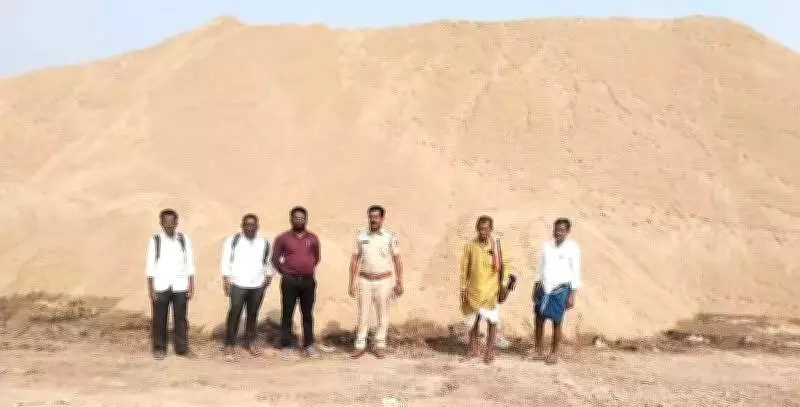
In a significant enforcement action spanning the past two weeks, the Department of Mines and Geology in Yadgiri district has seized a massive 2.7 lakh metric tonnes of illegally stocked sand, valued at approximately Rs 22.8 crore, from various locations along the Krishna River. This coordinated effort highlights the authorities' intensified focus on curbing unauthorized sand mining and storage operations that have plagued the region for years.
Three Separate Raids Uncover Widespread Illegal Activities
The crackdown involved three distinct cases, each targeting different areas within Yadgiri. On February 18, officials conducted raids in several villages of Surpur taluk, including Choudeshwara Halla, Hemmadagi, Karnal, and Addodagi. During this operation, they confiscated 2 lakh metric tonnes of sand, worth an estimated Rs 17.9 crore, which was illegally stored across 22 separate land parcels. Consequently, cases were registered against all 22 landowners at the Surpur police station, marking a decisive step towards legal accountability.
Subsequently, on February 27, a raid in Haiyal (B) of Vadagera taluk led to the seizure of 2,800 metric tonnes of sand, valued at Rs 23.8 lakh. A case was promptly filed against the individual responsible, identified as Yankamma Mallappa. In a third incident, on March 2, authorities discovered 63,533 metric tonnes of sand, worth Rs 5.4 crore, illegally stocked on land in Tonnur of Shahapur taluk. A case was registered at the Shahapur police station in connection with this finding.
Additional Seizures and Long-Standing Practices Exposed
Beyond the sand itself, the department also seized four excavators, each valued at Rs 15 lakh, which were allegedly used for illegal sand mining activities within the Hemmadagi village limits. Senior Geologist Veeresh Shantappa provided critical insights into the ongoing issue, noting that landowners who rent out their fields for such illegal storage will face financial repercussions. Specifically, royalty dues will be added to their Record of Rights, Tenancy, and Crops (RTC) records, ensuring that government losses are recovered.
Shantappa emphasized that this illicit practice has persisted for over a decade, with some farmers accepting payments as low as Rs 3-4 lakh for allowing their lands to be used. In response, letters have been dispatched to tahsildars to initiate the recovery process for these government losses, underscoring a renewed commitment to regulatory enforcement and environmental protection.
Broader Implications and Regional Context
This crackdown in Yadgiri occurs against a backdrop of heightened regional and global tensions, including conflicts in West Asia and international diplomatic moves. However, the focus here remains squarely on local governance and resource management. The seizures not only disrupt illegal economic activities but also aim to safeguard the Krishna River ecosystem from the detrimental effects of unregulated sand mining, which can lead to erosion, habitat destruction, and water quality degradation.
The department's actions signal a robust approach to combating environmental crimes, potentially setting a precedent for other regions grappling with similar issues. As investigations continue, stakeholders are urged to comply with legal frameworks to avoid severe penalties and contribute to sustainable development in the area.