

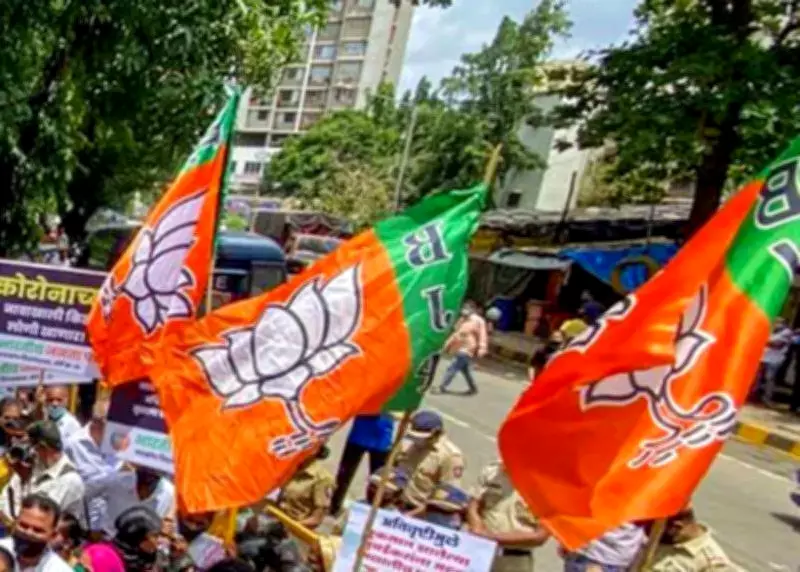
Yogi Adityanath and RSS Functionaries Engage in Intensive Coordination Meetings Across Uttar Pradesh
In a significant political development, Uttar Pradesh Chief Minister Yogi Adityanath has been holding extensive discussions with Rashtriya Swayamsevak Sangh (RSS) leaders, with a sharp focus on Hindutva ideology and enhancing coordination between the party's high command and grassroots workers. These meetings are part of the Bharatiya Janata Party's (BJP) strategic preparations for the crucial assembly elections scheduled for next year.
Ground-Level Feedback and Organizational Gaps Under Scrutiny
Sources close to the proceedings revealed that CM Yogi Adityanath actively sought first-hand feedback from Sangh leaders regarding the ground situation in Uttar Pradesh. The objective is to identify and address potential gaps in booth-level organization, social outreach efforts, and ideological messaging. This initiative is particularly aimed at countering the opposition, primarily the alliance between the Samajwadi Party and the Congress.
Experts analyzing the meetings noted that they effectively blend three key elements driving the BJP's electoral machinery: Sangh (RSS), which provides ideological grounding and a disciplined cadre network; Sangathan (Organization), which handles political mobilization; and Sarkar (Government), which delivers governance narratives to the public.

Statewide Tour and Emphasis on Hindutva
Accompanied by UP BJP chief Pankaj Chaudhary and state general secretary (organization) Dharam Pal Singh, CM Yogi Adityanath attended coordination meetings across all six organizational zones of Uttar Pradesh over the past ten days. These zones include West UP, Braj, Awadh, Bundelkhand-Kanpur, Kashi, and Gorakhpur.
The emphasis on Hindutva has been a cornerstone of the BJP's political narrative over the past decade. For Yogi Adityanath, a prominent Hindutva figure, reinforcing this ideological plank is seen as crucial for consolidating the party's core voter base. Analysts suggest that this strategy also serves to counter opposition attempts to build caste-based alliances, which could challenge the BJP's dominance in the state.
Historical Context and Electoral Implications
This marks the first time during Yogi Adityanath's second term as Chief Minister that such comprehensive coordination meetings with RSS functionaries have been organized. Political analysts point out that similar exercises were undertaken during his first tenure, ahead of the 2019 Lok Sabha elections and the 2022 assembly elections. Those efforts yielded significant electoral success, with the BJP winning 62 out of 80 seats in Uttar Pradesh during the 2019 parliamentary polls and securing a return to power in the state in 2022.
However, concerns have emerged within the BJP following the 2024 Lok Sabha elections, where a purported reduction in Sangh cadre activity was noted. While the party performed well nationally, the results in Uttar Pradesh were not as encouraging as expected. This has prompted the current round of meetings, aimed at reviving and strengthening coordination among the government, the BJP organization, and the RSS cadre.
Recent Interactions and Broader Engagement
CM Yogi Adityanath has already held several interactions with RSS chief Mohan Bhagwat in recent months. On November 24 last year, the Chief Minister met Bhagwat in Ayodhya for a nearly 90-minute closed-door meeting, followed by a 30-minute discussion in February this year in Lucknow. Additionally, between November 18 and 26 last year, RSS functionaries conducted a series of review meetings in Lucknow with state ministers and senior bureaucrats, highlighting the ongoing engagement between the Sangh and the state administration.
As the BJP gears up for the 2025 assembly elections, these coordination meetings underscore the party's reliance on its ideological roots and organizational strength to navigate the complex political landscape of Uttar Pradesh. The focus remains on ensuring a seamless integration of Hindutva messaging with effective governance and robust grassroots mobilization to secure electoral victory.






