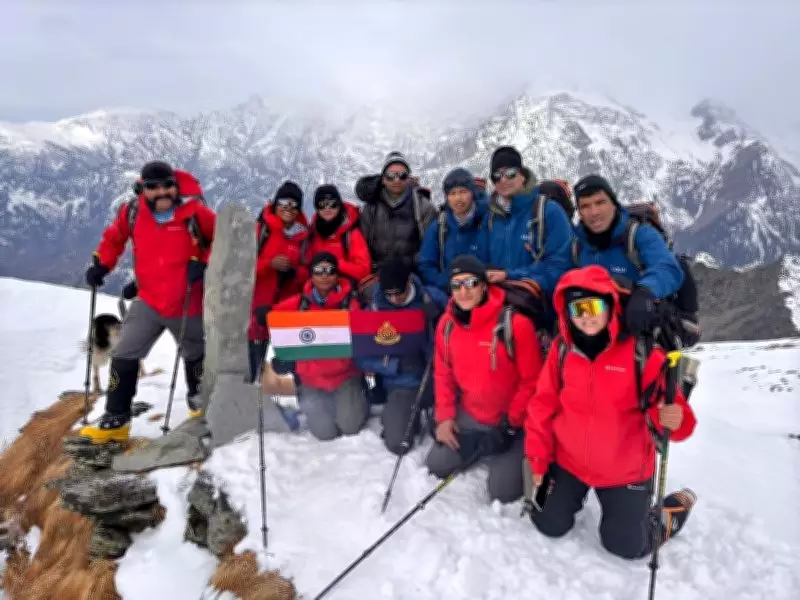
BSF Climbers Embark on Intensive Training in Manali for Himalayan Expedition
A specialised 14-day training programme is currently in full swing in Manali, Himachal Pradesh, aimed at preparing a team of Border Security Force (BSF) mountaineers for an ambitious upcoming expedition. The climbers are set to scale two of the world's highest peaks: Mount Everest and Mount Lhotse.
Rigorous Preparation for High-Altitude Challenges
Under the guidance of the Atal Bihari Vajpayee Institute of Mountaineering and Allied Sports (ABVIMAS), the training involves 18 BSF personnel, including four female climbers. The programme is designed as a refresher course to equip the team with advanced skills necessary for the formidable challenges of high-altitude mountaineering.
Objectives of the Expedition:

- Summit Mount Everest, the world's highest peak at 8,848.86 metres.
- Conquer Mount Lhotse, the fourth highest mountain on Earth at 8,516 metres.
Both peaks are located in the Himalayan range along the Nepal-Tibet border, demanding exceptional technical expertise, physical endurance, and proven experience in extreme conditions.
Comprehensive Training Curriculum
The training syllabus covers a wide range of critical areas to ensure the climbers are well-prepared:
- Advanced snow and ice craft for navigating treacherous terrain.
- Glacier travel techniques and crevasse rescue procedures.
- Fixed rope management and avalanche awareness.
- High-altitude acclimatisation and expedition logistics.
- Medical management in extreme environments.
A key focus is on updating safety protocols and modern technical skills, essential for the success and safety of such high-stakes missions.
Ideal Training Environment and Expert Insights
Avinash Negi, Director of ABVIMAS, highlighted the institute's unique location, surrounded by high mountains, glaciers, and snowfields, which provides an ideal natural setting for this type of training. "Training in actual mountain terrain gives climbers close exposure to snow and high-altitude conditions, which helps build their confidence, technical competence, and decision-making ability in extreme environments," he stated.
Negi emphasised the importance of proper pre-expedition training, noting that major Himalayan expeditions require significant investments of time, effort, and financial resources. "Therefore, proper pre-expedition training is extremely important to ensure the success and safety of such missions," he added.
Supporting National Capabilities
ABVIMAS regularly conducts such specialised programmes for national teams and adventure institutions, playing a vital role in capacity-building and promoting safe adventure practices. With a history of successfully preparing teams for challenging Himalayan expeditions, the institute continues to support defence forces in their demanding pursuits, contributing to India's mountaineering prowess on the global stage.