Cyprus Hosts Prestigious Chess Candidates Amid Regional Tensions
The island nation of Cyprus in the eastern Mediterranean is set to become the epicenter of elite classical chess for the next two weeks, as it welcomes both the Open and Women's categories of the highly anticipated 2026 Candidates tournament, commencing on March 28. This event serves as the exclusive pathway to a World Championship match, carrying immense significance for the global chess community after months of buildup and expectation.
Tournament Overshadowed by Geopolitical Concerns
However, the atmosphere surrounding the competition is notably tense, with pre-tournament uncertainties stemming from the ongoing regional conflicts in the Middle East casting a shadow over the proceedings. This anxiety has already impacted participation, as India's veteran Grandmaster Koneru Humpy withdrew from the Women's tournament just days before the opening ceremony, citing unspecified concerns.
Further apprehensions have been voiced by other top players, including World No. 2 Hikaru Nakamura, who expressed worries about potential instability in the power supply within the area. Adding to the unease, the recent cancellation of a World Series of Poker (WSOP) event in the region due to safety risks has raised questions about the International Chess Federation's (FIDE) contingency planning.

In an attempt to allay fears, FIDE issued a comprehensive 'Safety & Logistics FAQ' document five days prior to the tournament's start, asserting that the risks are "extremely low and overstated." Despite these assurances, the situation prompts a profound question for the competitors: How does one focus on intricate grandmaster strategies when aware of escalating global tensions just beyond the venue walls?
Echoes from the Past: The 1978 Iran Chess Experience
This scenario evokes memories of a historical parallel from 1978, involving a young Indian chess player, Pravin Thipsay, who would later become India's third Grandmaster. Thipsay, alongside former national champion Mohamed Rafiq Khan, traveled to Tehran to participate in a tournament, entering an Iran that was in the final throes of its pro-Western monarchy under Shah Mohammad Reza Pahlavi.
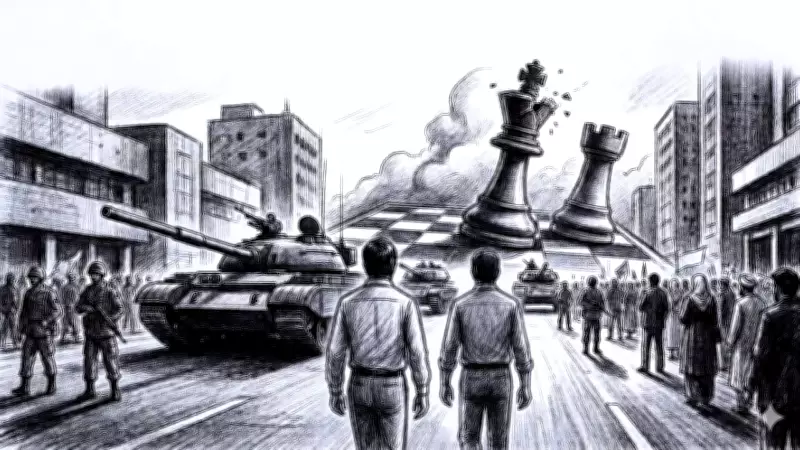
The country was engulfed in massive civil resistance, with the regime crumbling. On September 8, 1978, a day infamously known as "Black Friday," the military opened fire on protesters in Tehran, resulting in hundreds of fatalities and marking a irreversible turning point. "When we actually entered the city, we saw tanks on the road, there were other problems, but what was important was that we saw tanks on the road, and it was disturbing for a day or so," Thipsay recounted in an interview.
A World of Isolation: Chess in a Pre-Digital Era
In the 1970s, the chess world operated in a markedly different environment—smaller, more insular, and devoid of today's hyper-connectivity. Players embarked on international journeys with minimal resources, lacking smartphones or social media to provide real-time updates on geopolitical developments. "We found it a little bit strange, but also there was no access to news, and we were going to Iran for the first time," Thipsay recalled. "Nothing much was known to us. I was also very young. There were Russians and Americans playing, other Filipinos, other players. So I think we lived in our own world."
The tournament was held at Tehran's Olympic Village, situated far from the city center with restricted entry, which limited players' exposure to the outside turmoil. This physical separation was exacerbated by a complete linguistic and digital blackout. "We did not get any news of the outside world because in those days, 1978, nobody spoke English in Iran, and the newspapers were all in the Iranian language. So we couldn't really get any information. There's no television," he explained.
Thipsay highlighted the stark contrast with modern times, noting, "Even when I had gone to a World Junior, I did not have any way of contacting my parents by phone. I just wrote some letters. I never got answers back because it took a lot of time." Today, players are incessantly connected, monitoring geopolitical shifts as intently as they study opening novelties.

Playing Through Revolution and Cold Nights
In the weeks following the 1978 tournament, the Iranian Revolution intensified, culminating in the Shah's exile in January 1979 and the establishment of the Islamic Republic under Ayatollah Khomeini. Reflecting on the experience, Thipsay stated, "There was no direct violence seen before us, and the tanks were just there to control, prevent the mobs from gathering. I think I looked at it, it did not really affect me at that time. I don't know if it will not affect me today or if it will not affect other players, but that's how the only experience I have, we just played a tournament."
While the revolutionary fervor did not breach the Olympic Village's confines, the players faced other challenges. "We didn't do very well because it was very cold," Thipsay admitted. "I think that's the main reason. It was surprisingly quite cold at nights." For the Iranian participants, however, the weight of the impending political storm must have been palpable. Under the subsequent regime, chess was temporarily banned for being deemed "un-Islamic" before its reinstatement in the late 1980s.
Thipsay concluded with a poignant observation on the silent divide between locals and foreigners during that turbulent period: "We, myself and Rafiq Khan or the Russians, the Americans, Filipinos did not get affected by that. And the Iranians, if they got, we don't know, but they never discussed those things with us." This historical vignette underscores chess's enduring ability to persist amidst global upheavals, a resilience now being tested anew in Cyprus.