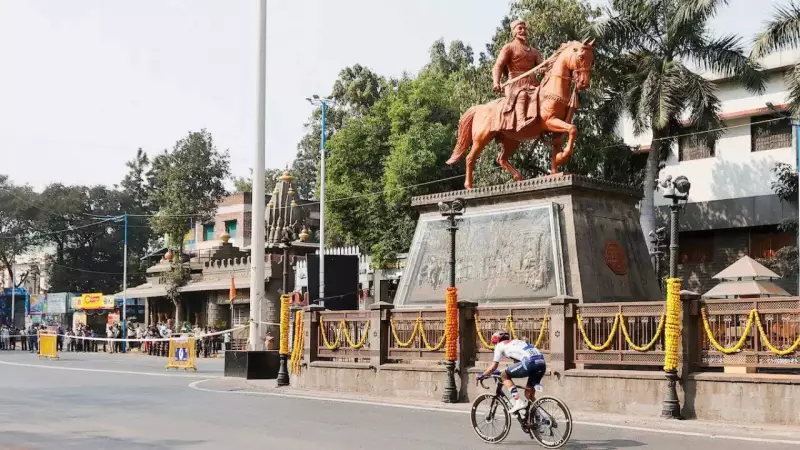
NEW DELHI: Cycling possesses a fleeting, transient nature that refuses to pause for recognition. It sweeps through rural landscapes, urban arteries, and past spectators in a blur of motion, offering no lingering moments. Last week marked a historic moment as India hosted its first-ever UCI 2.2 category road racing event, the Pune Grand Tour (PGT), where domestic audiences witnessed professional cyclists navigating diverse terrains for the very first time.
The Spectator's Dilemma and Commentary's Daunting Task
Unlike cricket or football, which allow spectators hours or days to immerse themselves, cycling provides merely an instant. A blink, and the peloton vanishes. This characteristic extends a formidable challenge to those tasked with narrating the action. Commentating on professional cycling, while simultaneously tracking numerous riders and explaining geographical contexts to viewers, represents an exceptionally demanding endeavor.
"I don't want to claim too much on my behalf, but it is, I think, one of the hardest sports to commentate," stated Ned Boulting, a globally recognized voice in cycling commentary, during an exclusive conversation with TimesofIndia.com at the Pune Grand Tour. His co-commentator, Graham Jones, a five-time Tour de France veteran, described the delicate balance required.

Walking the Tightrope Between Education and Entertainment
"That's been a little bit of a challenge for us, but we've quite enjoyed it," Jones remarked. "There are a lot of people unfamiliar with cycling, so we can't get too deep into the technology and what's going on. We have to not go too simple because there are plenty of people who are cycling thinking, I know, I don't want to hear all about that."
Cycling commentary transcends mere play-by-play announcements. It involves unraveling a complex tapestry of team tactics, geographical nuances, human endurance limits, and instantaneous strategic decisions. Crucially, commentators must maintain audience engagement throughout this intricate process.
The Overwhelming Scale: Identifying Riders in Real-Time
Boulting highlighted the sheer numerical challenge, noting, "I think information is the hardest part because again, to compare it to most sports, which are inside stadiums, you only have like 20 players or something like that. Here you have 170 something." Identification becomes particularly arduous when camera angles obscure rider numbers, forcing commentators to memorize team kits and individual characteristics rapidly.
"Some of whom I'd never heard of, I'll be totally honest, before this race started, because they are amateur clubs from Amsterdam. And so I have to learn very fast what these new kids are like," Boulting confessed. Even team recognition proves insufficient, as he elaborated: "There could be any number of six different riders on that team. So you have to learn very fast who's got long hair, who's got tattoos, who's a little bit taller."
The Absence of Scripted Narratives
Unlike football commentary, which often incorporates prepared storylines, cycling offers no such predictability. "There's no script because you have to react live," Boulting emphasized. "As soon as you see me in the studio, till the very last minute, everything... none of that is scripted. That's all just from the top of my head." This improvisational demand adds another layer of complexity to an already taxing role.
Cycling's Unique Visual Storytelling Advantage
Despite its challenges, road cycling presents a distinctive benefit that stadium-based sports cannot match. "Because it's on open roads, it shows off the countryside," Jones explained enthusiastically. "Some of the drone shots we've seen over the last few days have been fantastic." He contrasted this with football or tennis tournaments confined within arenas, which lack this scenic dimension.
This visual storytelling capability often underpins governmental and corporate sponsorship for major races. Jones pointed out, "It's to promote and display to the rest of the world how nice this area is," citing how events like the Tour de France masterfully blend athletic competition with breathtaking landscapes, featuring castles, chateaux, and communities that adorn fields visible from aerial cameras.

Beyond Sport: Promoting Culture and Geography
Jones believes comprehensive understanding extends far beyond cycling mechanics. "You need to understand the local culture and geography. I think the cycling bit is 50 percent of it," he added with a smile. "The rest of it is promoting the town and the area and what the future holds." This dual responsibility transforms commentators into cultural ambassadors during international broadcasts.
While cycling may not yet enjoy the immediate recognition of cricket or football within India, the commentary booth mirrors the sport's own relentless, unforgiving nature on the road. When executed skillfully, it delivers a uniquely rewarding experience that captures both athletic brilliance and scenic grandeur, potentially elevating the sport's profile across the nation through events like the pioneering Pune Grand Tour.