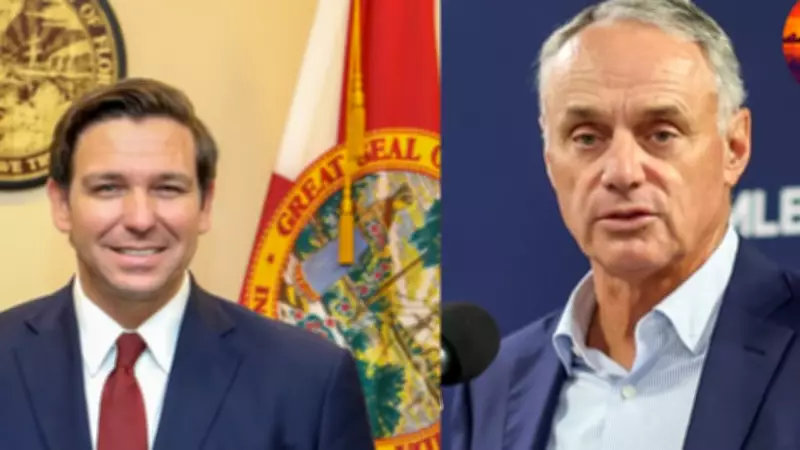
Florida Governor and MLB Commissioner Hold Crucial Meeting on Rays Stadium Future
In a significant development for Florida's sports landscape, Governor Ron DeSantis and Major League Baseball Commissioner Rob Manfred convened on Tuesday to deliberate on the newly unveiled plans for a potential new home for the Tampa Bay Rays. The high-profile meeting took place at the Hillsborough College campus site on Dale Mabry Highway, a location currently under evaluation for a transformative ballpark and redevelopment initiative.
Strengthening Commitment to Tampa Bay's Baseball Future
The joint appearance of these two influential leaders has dramatically intensified focus on securing the Rays' long-term presence in the Tampa Bay region. For months, team executives, local government officials, and league representatives have been engaged in bipartisan efforts to replace the aging Tropicana Field in St. Petersburg with a modern, state-of-the-art venue in Tampa. While enthusiasm surrounding this ambitious proposal continues to build, substantial financial and logistical hurdles remain that could potentially delay or derail a final agreement.
The conference commenced at 10 am Eastern Standard Time, marking a pivotal moment in the stadium discussion timeline. The Rays organization has expressed optimism about finalizing an agreement with Hillsborough College within the next six months, with ambitious plans to host their inaugural game at the new facility on Opening Day of the 2029 season.

Rays Ownership Outlines Substantial Financial Commitment
During the presentation, Rays ownership demonstrated their serious commitment to the project by outlining their willingness to shoulder a significant portion of the construction costs. Under the current proposal framework, the organization has pledged to cover at least fifty percent of the total project expenditure, with provisions to increase their contribution should overall costs escalate beyond initial projections.
Team leaders further assured stakeholders that they would assume responsibility for ongoing maintenance, operations, and future upgrades once the facility becomes operational. This comprehensive approach aims to provide long-term stability and quality assurance for the proposed stadium.
Funding Structure and Economic Impact Projections
The remaining balance of the project would be funded by local governments through what state officials describe as "a blend of tourism development tax revenue, hotel assessments, and other specific dedicated sources." Importantly, under the existing proposed structure, officials have emphasized that no general county tax dollars would be utilized for stadium construction, addressing a common concern among taxpayers.
Proponents of the stadium plan contend that a new sports complex would generate thousands of dollars in sustained economic activity through job creation, increased tourism, and ancillary business development. They argue this investment would further solidify the Tampa Bay area's standing as a premier destination for major sporting events and enhance its overall market profile.
"There remains considerable work ahead to transform this vision into reality," acknowledged the Rays CEO during the discussions. "However, I can state with absolute conviction that we believe in our ability to create a world-class work-live-learn-play development here in Tampa Bay that will benefit the community for generations."
State Support and League Priorities
While Governor DeSantis stopped short of committing direct state funds for the stadium construction itself, he expressed openness to supporting associated infrastructure requests. This includes potential state assistance with transportation facility renovations and the transfer of existing college facilities located within the proposed development area.
Given that the land under consideration is state-owned, any project advancement would require extensive interagency coordination and collaboration across multiple government departments. This adds a layer of complexity to the planning process that all parties must navigate carefully.

MLB Commissioner Rob Manfred reiterated the league's strong preference for maintaining the franchise in a permanent, stable location, emphasizing that a new facility is essential for the franchise's competitive future and the overall health of Major League Baseball. Local leaders echoed this sentiment while simultaneously advocating for robust taxpayer safeguards and complete transparency throughout all phases of the negotiation and development process.