Divya Deshmukh Misses Critical Queen Exchange in Women's Candidates Chess Clash
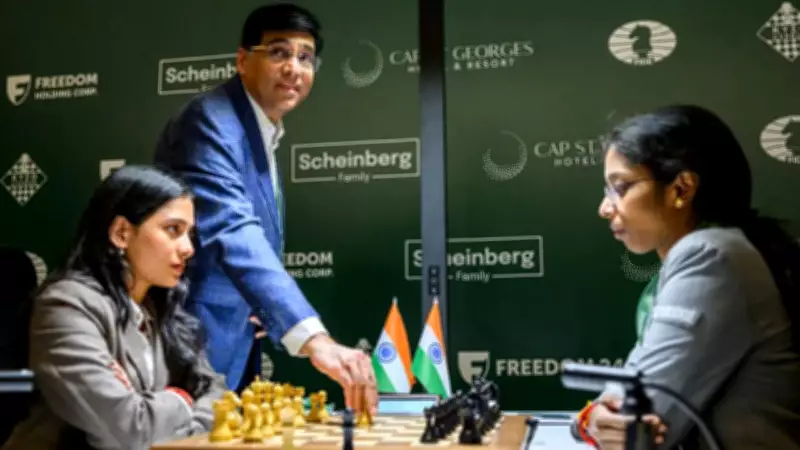
In a tense all-India battle at the Women's Candidates chess tournament in Cyprus on Monday, Divya Deshmukh faced compatriot R Vaishali in a game that stood out as the lone exciting contest of the day. With just four seconds left on her clock, Deshmukh executed a perfect move, Rxb7, seizing an advantage after Vaishali's 34th knight-move had shifted computer evaluation heavily in her favor. However, the drama unfolded on the 37th turn when Deshmukh overlooked a crucial queen-exchanging move, Qg4, which would have pressured Vaishali significantly and potentially altered the outcome.
Missed Opportunity and Equalization
Deshmukh's missed chance allowed Vaishali to equalize the position, leading to a draw four moves later. Reflecting on the game, Deshmukh stated, "I had seen Vaishali's queen exchange in advance (40...Qxh3!), but simply missed the winning alternative." The match concluded in a rook and five pawns endgame, where Vaishali's rook effectively controlled Deshmukh's passed pawn, cementing the deadlock. This clash was particularly notable as it injected some drama into a day otherwise dominated by cautious play, with 12 of the 16 Candidates opting for safe strategies.
Draws Dominate Tournament Proceedings
For the second consecutive day, all four games in the women's section ended in draws, highlighting the competitive parity among the top players. In the Open section, Indian co-leader R Praggnanandhaa, playing with black pieces, managed to secure a draw against higher-ranked Chinese GM Wei Yi despite having an extra pawn and better clock control. The game lasted 46 moves, with Praggnanandhaa ultimately falling short on material to force a win. Similarly, other matches saw defensive prowess, such as in a Petrov's Defence game between former women's champion Tan Zhongyi of China and Ukraine's GM Anna Muzychuk, which ended in a 32-move draw, echoing their 2017 World Championship encounter.

Strategic Play in Open Section
In the Open section, reigning World Cup winner Javokhir Sindarov failed to capitalize on an opening advantage with white pieces against lower-ranked Matthias Bluebaum. Bluebaum's choice of Petrov's Defence led to a three-fold rook repetition in the endgame, forcing a draw after 42 moves. This strategic maneuvering underscored the tournament's trend of players prioritizing solid positions over aggressive risks, resulting in a high number of drawn games across both sections.