The chess world is grappling with a high-stakes dilemma: how should the sport's governing body handle the emotional eruptions of its biggest star? A series of incidents involving World Champion Magnus Carlsen at the 2025 World Rapid and Blitz Championship in Doha has ignited a fierce debate about sportsmanship, influence, and the responsibility of the International Chess Federation (FIDE).
The Incidents That Lit the Fuse
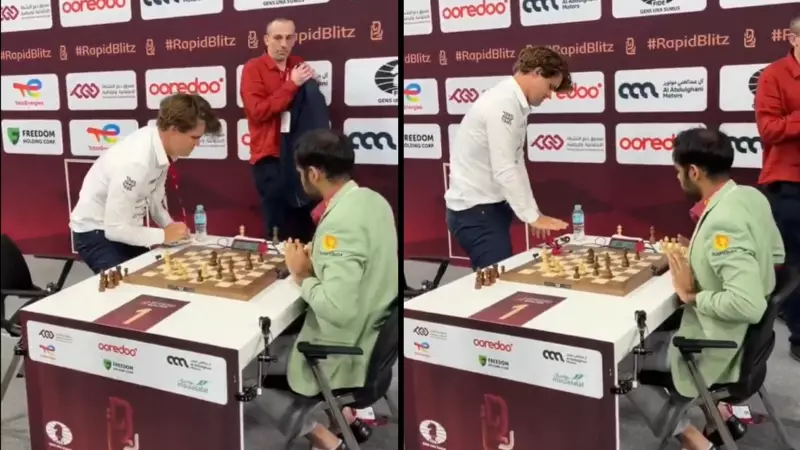
The controversy reached a peak during Carlsen's blitz game against Haik Martirosyan. With merely two seconds remaining, Carlsen paused the game after accidentally scattering the pieces, failing to restore them correctly. The arbiter, Chris Bird, ruled the move illegal. A frustrated Martirosyan watched as Carlsen engaged in a brief argument before returning, shaking hands, and conceding defeat.
This was not an isolated event in Doha. It was one of four notable incidents involving the Norwegian grandmaster during the tournament. His emotional reactions included slamming the table after his queen slipped against India's Arjun Erigaisi, shoving a camera following a loss to Vladislav Artemiev, and shouting aloud after a blunder against Fabiano Caruana.

The Divide: Players Demand Action, FIDE Sees "Normal Occurrences"
While many in the chess community have questioned FIDE's apparent reluctance to censure Carlsen, the parent body has a different perspective. In a statement to The Indian Express, FIDE acknowledged the public discussion but framed such episodes as "normal occurrences" in an engaged global community. They emphasized a focus on the sport's growth, citing increased participation, sponsor engagement, and funding as signs of positive direction.
This stance has drawn criticism from prominent players. Armenian-American GM Levon Aronian took to social media platform X to state, "I don't think we should be normalising tantrums like that." He argued that loud disturbances affect opponents mid-game and pointed out that such unsportsmanlike conduct is penalized in other sports to set an example for younger athletes.
Indian Grandmaster Srinath Narayan echoed these concerns, highlighting the unique influence Carlsen wields. "The danger... is that people perceive it to be something cool. And Magnus is very influential... kids look up to him," Srinath said. He also criticized Carlsen's habitual tardiness, calling it "very annoying" and detrimental to the sport's decorum.
The Core Issue: Influence and the Message of Inaction
Both Aronian and Srinath pinpoint the lack of official repercussions as the central problem. They argue that an apology, which Carlsen did offer, is insufficient without disciplinary follow-through. Srinath suggested that standard financial penalties are ineffective for a top-earning player like Carlsen and proposed that a specific reprimand was necessary to send the right message.
"Normalising this kind of behaviour or leaving it unaddressed... kids get the message that it is a cool thing to do," Srinath warned. He believes a formal reprimand would clearly communicate that while Carlsen is a champion, his actions are not to be emulated.
The debate extends beyond Doha, reflecting a pattern of controversies at recent FIDE events, including the 2024 Candidates' "shoegate" and the shared Blitz title decision in 2025. As chess enjoys unprecedented mainstream popularity, the governing body faces the complex task of balancing star power with the integrity and sportsmanship at the heart of the game.